Summertime Sadness: Remembering Ricardo L. Ortiz
Pasadena, California, October 2025, Celebration of Life (Hereafter, Pasadena) I
Ana Mercedes, Ana Rosa, Paul, Daniel, Andrew, and Colin, my heart goes out to you. Ricardo—your brother, your uncle, your partner—loved you so much. Colin, I can't count the times he said, "so this is happening," and then pulled up a video of a project you'd done or just a photo of you looking cool.
Ricardo was a California Cuban. Wherever he was, una cubanidad californiana was there, too.
Washington, District of Columbia, July 2026 (Hereafter, WDC): Antes que anochezca [Before Night Falls], Reinaldo Arenas
I'm sitting in Pitango, a café on Columbia Road in Adams Morgan, Washington, District of Columbia, at one of the tables Ricardo used to sit at, near the back. I'm wearing a Dodgers cap in his honor: los Doyer, as he'd sometimes mutter to me, I to him, no further words necessary. I'd often walk by this café and see him sitting here. Sometimes, I'd call "Yo" from the door, wave, and keep going. Sometimes, I'd come in, walk up and surprise him, both of us cracking up. Sometimes, I'd see him, think to myself, "effing Ortíz, bro," and just keep on going, because you knew you'd see him sitting there again. There would always be a next time.
In January, Ricardo's partner, Paul O'Neill, asked me if I wanted to come to Ricardo's office at Georgetown and pick out some books of his. I sit here now with a stack of those books on the chair next to me. From Antes que anochezca [Before Night Falls]:
Una vez, fui a una presentación de un libro de Lydia Cabrera; había una anciana sentada debajo de una mata de mango, frente a una mesita, firmando sus libros; era Lydia Cabrera. Había dejado su enorme quinta en La Habana, su enorme biblioteca, todo su pasado, y ahora vivía en Miami en un modesto apartamento y firmaba a la intemperie, debajo de una mata de mango, sus propios libros que ella misma publicaba.1
By that passage, Ricardo drew a squiggly line, then wrote the marginalium, "Lydia Cabrera."
Arenas cared about that mango tree — such a fine way to say it, in Cuban, mata de mango—so much so he mentioned it twice. An open-air book signing by the grande dame of Cuban-exile letters. No, it didn't happen in his Los Angeles. Nor did it happen in my Hialeah. It happened in Miami—but at least it was under that mata de mango.
Pasadena II
Ricardo was a great friend to me for 20 years. I loved and admired him so much. He was a once-in-a-lifetime, exceptional person in your life. No matter what was going on, he made you feel so happy. To be his friend was to try and return all that happiness back to him, times a billion. He deserved as much happiness as this life can give us, and I'm grateful he had so much. He gave us words and ideas; laughter, food, and drink; he gave me shit, always with that most devastating of Ricardo touches, the Ricardo wink. He gave us hugs, TV shows, and baseball games; money, people, and kisses—in a word, what we call love. He did it with generosity, joy, and, yes, an edge. Being with Ricardo was singular and true: un tremendo vacilón.
WDC: How Did This Happen? Poems for the Not So Young Anymore, edited by Mary D. Esselman and Elizabeth Ash Vélez
And who, you may ask, are 'we,' daring to accompany you through aging, mixing our words with those of poetic geniuses like Lucille Clifton, Sylvia Plath, and Ada Limón? We're Mary, fifty-four, and Elizabeth, seventy-one, longtime best friends who love literature (we're both teachers) and pop culture (both former People magazine reporters) and who for the past thirty years have helped each other make sense of the world, one poem or Broad City episode at a time.
Liz Vélez, great friend to Ricardo, inscribed this book to him, and I see the blue ink of Liz's handwriting, which begins the inscription with "4/8/2017 Ricardo -" and damn it if the first R of Ricardo in Liz's hand doesn't look like the figure of a person, right hand on the hip, left one up in the air with a flourish, leg planted out to the left: a disco pose if there ever was one.
Thanksgiving football games in Dallas will continue, the Cowboys will, of course, host those games, and there will be—just as there always has been—Thanksgiving Cowboys games on the TV at the Vélez's because Larry, Liz's husband, loves the Cowboys. Ricardo would text from Thanksgiving at the Vélez's after a big play, a play I myself would have seen at the same time, carving the carne de puero while looking forward to hosting him for dessert. I'd text back, reply blurred by the grease on the phone screen: "Dude."
Pasadena III
Ricardo was so handsome. I used to call him the Cuban George Clooney. He was my Cuban brother. When my daughter was a little kid, he gave her The Princess and the Frog DVD. When she went off to college, he gave her a book called Cuba: An American History. And, if you ask my wife, she'll tell you: Ricardo was her favorite Cuban ever, especially because he'd put me in my place.
Ricardo was born in Cuba and grew up in L.A. I was born of Cuban parents in Miami and grew up in Hialeah. One of his long-running jokes was to introduce me to people by saying, "This is Tony. He's me, but at George Washington University." I'd respond: "Ricardo is the Yankees; I'm the Mets." By that, of course, I meant Ricardo was the gold medal, me silver. It was my greatest honor to look up at him from the medal stand.
WDC: The Crying of Lot 49, Thomas Pynchon
...motorized, metal extensions of themselves, of their families and what their whole lives must be like, out there so naked for anybody, a stranger like himself, to look at, frame cockeyed, rusty underneath, fender repainted in a shade just off enough to depress the value, if not Mucho himself, inside smelling hopelessly of children, supermarket booze, two, sometimes three generations of cigarette smokers, or only of dust—and when the cars were swept out you had to look at the actual residue of these lives, and there was no way of telling what things had been truly refused (when so little he supposed came by that out of fear most of it had to be taken and kept) and what had simply (perhaps tragically) been lost: clipped coupons promising savings of 5 or 10¢, trading stamps, pink flyers advertising specials at the markets, butts, tooth-shy combs, help-wanted ads, Yellow Pages torn from the phone book, rags of old underwear or dresses that already were period costumes, for wiping your own breath off the inside of a windshield with so you could see whatever it was, a movie, a woman or car you coveted, a cop who might pull you over just for drill, all the bits and pieces coated uniformly, like a salad of despair, in a gray dressing of ash, condensed exhaust, dust, body wastes—it made him sick to look, but he had to look.
The letters and words I have underlined here are the letters and words underlined by Ricardo himself in the book.
I never saw Ricardo teach. I imagine students in his class, States of California, turning Pynchon into Pinchón by taking in the ridiculousness of Wendell "Mucho" Maas; the excess of this extending, single sentence in all its listing mania; and, maybe, even Ricardo's own L.A.-motorist testimony from the freeways of his 20s in the '80s.
Pasadena IV
The coincidences were nuts: we were Cuban American; we studied and published books about Cuban American literature; we were English professors at the two "George" universities in the District of Columbia; neither one of us came from money; we both did the I Love Lucy-Ricky Ricardo thing (hooking up with Irish American redheads [Paul, I know you're not a redhead and neither is my wife, but you both are Irish American; you get what I mean]); and we both lived in Adams Morgan, DC. You'd think, "that's too perfect; one of these guys is a hater." But no: It was perfect.
Another Ricardo joke was to say that, even though he was the "real" Cuban, born in Cuba, I was actually the "most Cuban" of the two of us. I played that up. I'd see him on his way to Georgetown, waiting for the bus on Columbia Road across the street from Perry's, the restaurant where he'd had his 50th. He'd be looking at his phone. I'd come up to him, stealth mode, then yell, in chusmería fashion, "¡Dímelo, asere, qué volá, Ricardo Ortíz, el malo de la película!" Startled, laughing, and half embarrassed, he'd tell the person next to him, "It's OK. We know each other."
WDC: Life on the Hyphen: The Cuban-American Way, Gustavo Pérez Firmat
Ricardo wrote, "such a queer book! prefers 'receptiveness' to 'resistance.' his 'holes' are never orifices, but they certainly constrict and contract -."
He wrote that on the inside cover of the book.
"[C]ertainly constrict and contract": I don't know about you, but it's the certainly that does it for me, that is, bringing back his timbre. It's Ricardo's voice you can hear speaking the word.
Pasadena V
Ricardo was brilliant. I knew it even before we met in person. That was in 1997, reading his essay, "Café, Culpa and Capital: Nostalgic Addictions of Cuban Exile." I thought, "¿Quién carajo se cree que es este tipo?" Writing the words café, culpa, and capital in Spanish; putting an accent mark over the I in Ortíz on purpose, even though it's wrong; publishing the essay in the freaking Yale Journal of Criticism. It was the best essay ever written about Cuban Americans—then and now. Without Ricardo's beautiful exploration of being Cuban in America breaking ground for us, I (and many others) don't have a career. His great, beloved friend, the late José Muñoz, called Ricardo's book, Cultural Erotics in Cuban America, the best book ever written about Cuban American culture. 100%. José proclaimed this at a symposium in 2009 at George Washington University. I remember the look on Ricardo's face: "Oh, stop it!" it said, but also, "José's not wrong."
WDC: Make Your Home Among Strangers, Jeanine Capó-Crucet
Ricardo wrote the marginalium,"Hialeah."
He and I never saw each other in Hialeah. We never saw each other in Los Angeles. We never met in Miami, for that matter, and Miami was always number three, behind whichever city we were putting first and second at the time, Hialeah or Los Angeles, in our construction of Cuban localities.
José Muñoz was from Hialeah. I bumped into José and Ricardo once at the Safeway in Adams Morgan. José called me over, conspiratorially, laughing, while Ricardo was getting meat for picadillo.
"Listen to this," said José.
"What?"
"Before we left Ricardo's place, I rearranged all the books on his shelf: I turned them upside down, put them in backwards."
"Holy shit."
"It's going to drive him fucking nuts when he finds out!"
Pasadena VI
I can see Ricardo now, sitting in a café in Adams Morgan — Pitango, Compass, Philz, Pleasant Pops, depending on the era. He's at his laptop, tight t-shirt, glasses, writing a letter of recommendation, finishing an article, emailing or texting one of you guys. I see us at the gay and lesbian sports bar in Adams Morgan, watching the Nationals win the World Series. He texted our Mexican hermanx, Amanda Phillips, that night the following messages: "!!!!!!!!"; "!"; "xoxoxoxoxo"; and, finally, the words, "still at Pitchers with Tony!" I can see him buzzing his great friend, Randy Cole, into the condo after Ricardo's first hip surgery, Randy coming up the stairs with a ton of barbecue for us. I see Ricardo on a hike in Rock Creek Park with his nephew, Colin, in the early months of COVID; the two of them are masked up, so giddy to be outside. I can hear Ricardo telling me what to buy him from Safeway after his back surgery: a small container of cut fruit, Strawberry Frosted Flakes, and three bottles of unflavored sparkling water. At the store, I said to myself, dude, it's Ricardo; I'm buying him four bottles of sparkling water. I was so happy, walking back to the apartment with his stuff. What could ever be better than doing something nice for Ricardo? I went into his kitchen and began putting the sparkling water away in the fridge. Lo and behold: Each of the bottles fit, but one. From the couch, Ricardo was watching me. I saw him smile. He said, "next time"—devastating wink—"just bring the three."
WDC: Guillotine, Eduardo Corral
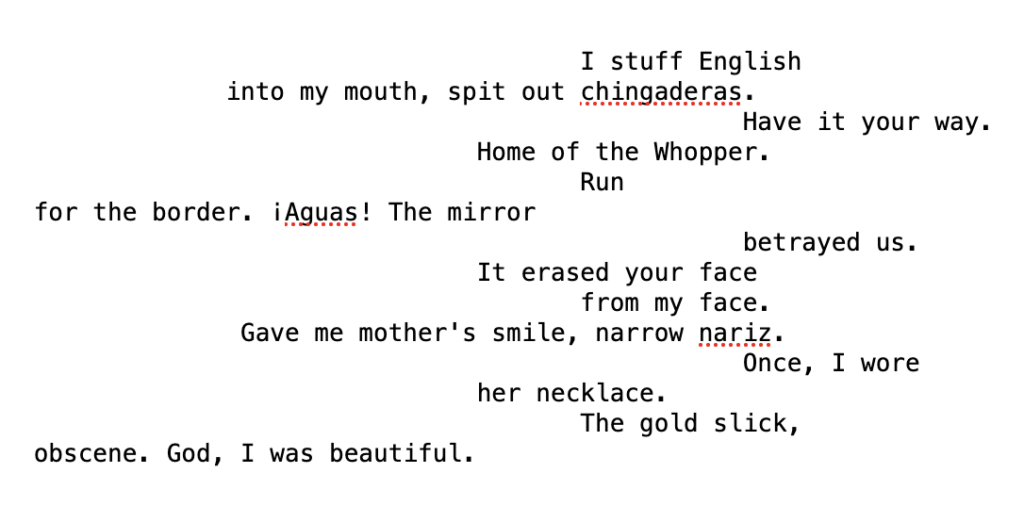
There is always something about Corral's rhythm and beats, where he makes you go fast to where he's taking you, at the expense of the imagery—on purpose—but he also wants you to get there slowly, at the expense of the imagery, too. It is remarkable work that, in the appearance and rhythm of the lines, the speaker gives you the sensory material he kind of also doesn't want you to feel.
Ricardo and I talked a lot about Slow Lightning, Corral's first book of poems. Ricardo told me about Guillotine, but I never got around to getting it in time to talk about it with him.
English stuffed into our mouths, bro. Gold slick, obscene, and beautiful.
Pasadena VII
Ricardo, we never forget you. Ricardo, we love you.
Antonio López is Associate Professor of English at George Washington University and author of Unbecoming Blackness: The Diaspora Cultures of Afro-Cuban America.
References
- "One time, I went to the launch of a book by Lydia Cabrera; there was an old woman sitting underneath a mango tree, at a little table, signing her books; it was Lydia Cabrera. She'd left behind her huge estate in Havana, her huge library, her entire past, and was now living in Miami in a modest apartment and signing, outdoors, beneath a mango tree, her own books which she herself was publishing." (my translation) ↩︎