Few movies epitomize the Hollywood of the 1980s quite so well as John Landis's 1980 comedy The Blues Brothers. We might associate the decade with the special effects blockbusters that became common in the wake of Jaws and Star Wars, and in this respect Landis's film qualifies. The Blues Brothers cost a then-massive $30 million, and it briefly held the record for most cars destroyed during filming, with its tally of 104 beating out the original 1974 Gone in 60 Seconds, a heist movie made by stuntman H. B. Halicki (93 cars destroyed). Even more than Halicki's movies, The Blues Brothers was not so much about filming car chases as it was about destroying automobiles as spectacularly as possible, including a famous scene in which Landis filmed one being dropped from a helicopter. In this respect, it succinctly marks the shift from the earlier era exemplified by Peter Yates's 1968 Bullitt (over 80 cars destroyed) to the Fast and the Furious franchise and the current record holder, Michael Bay's 2011 Transformers III: Dark of the Moon (532 cars destroyed).1 Moreover, as the first movie based on a Saturday Night Live sketch, The Blues Brothers ushered in what would become a virtual genre in the 1990s, and thereby helped initiate the shift to movies based on bankable pre-existing concepts. Finally, Landis's movie is frequently credited with launching the wave of Hollywood movies made in Chicago in the 1980s — a wave premised not only on The Blues Brothers' success but on aggressive recruiting by the city and the Illinois Film Office and, not least, unions that were more amenable than the ones in California and New York.2 The Blues Brothers — ironically, about the effort to pay a property tax bill — thus helped usher in the era of film tax credits designed to lure business (Illinois, which began offering a credit in 2004, currently offers 35% on production spending that meet the state's requirements.)3
In this respect it's somewhat surprising that the first roughly seven minutes of The Blues Brothers look like they come from a New Hollywood film made a decade earlier. I want to describe this opening at length, in large part because it itself proceeds at a markedly slower pace than what follows. This difference allows us to see the opening not as the parody of New Hollywood we might expect from an SNL movie, but rather as an allusion that at once acknowledges The Blues Brothers' debt to New Hollywood and marks its distance from it.
Landis's musical comedy begins without music, or comedy. A series of grainy aerial shots of the steel mills southeast of Chicago at sunrise gives way to a crane shot of a corrections officer raising the flag outside the Joliet Correctional Facility. Then we get a sequence shot from behind (and in one instance, below, through a metal grill walkway) of two more corrections officers walking John Belushi's Jake Blues down various hallways. This ends with a long shot of the three standing in front of a pair of opening doors. Two other officers stand at the right and left edges of the frame, holding rifles, and a fifth stands in profile at the left of the doors, the sound of whose opening replaces the sound of the three men walking. A crane shot then shows Jake and his guards moving through the geometrically laid out prison yard while groups of inmates march and do calisthenics to their left. Over these shots, set to faint ambient sound, we get credits for crew members and an Executive Producer. Finally, Landis gives us a medium shot of the three arriving at yet another door. One guard turns and says, "Well, this is it" as he opens the door. The trio go to a window with tape marks on the floor in front of it, and the other guard, carrying a clip board, announces Belushi as '7474505B." The officer at the window (Frank Oz) turns to retrieve Belushi's possessions, and in a close-up of Belushi's hands drumming on the counter, we see that the fingers on his left hand are tattooed "JAKE," in a clear homage to the "LOVE" and "HATE" tattoos sported by Robert Mitchum's character in Charles Laughton's 1955 The Night of the Hunter.
Now we start to get the jokes, beginning with the used condom that is among the possessions being returned to Jake. A battered police cruiser drives past the prison and pulls up at its entrance, and in a close-up of Dan Ackroyd's hands on the wheel we see that "ELWOOD" is tattooed across the right and just the first two fingers of the left. Jake, forced to stand behind a tape mark in front of Oz's desk, falls awkwardly forward with his hand on the counter to sign his paperwork with an X. We're easing into the comedy, and we see Belushi and Ackroyd reunited and wearing their trademark suits. But it is only at almost six and a half minutes in, when Landis finally cuts to close-ups of the stars' faces above their names and the movie's title, and we hear the first horn burst of the Blues Brothers band's cover of Taj Mahal's 1968 "She Caught the Katy," that we are fully in the movie that we know.
The Blues Brothers literally begins, then, by walking us out of New Hollywood through a series of doors. In what follows I read the film as, in fact, self-consciously allegorizing the shift from New Hollywood to the subsequent mode of film production over the course of the 1970s. On one hand, the movie understands this shift as liberating, insofar as it associates New Hollywood style with a literal prison whose structures and rules constrain the unpredictable physicality already at that point associated with Belushi's star persona. On the other hand, it sees this shift as continuous with a problem that it imaginatively sets out to resolve: the decline of meaningful male labor over the course of the same decade. This decline is figured most obviously by the opening shots of steel mills — mills that play no role in the plot, but which provide a context for the titular brothers' efforts to get the band back together and thereby free their former bandmates from a series of deadening and implicitly feminine service jobs. The transition from an industrial to a service economy over the course of the decade has been well-documented by historians, most recently Gabriel Winant in his 2021 book about Pittsburgh, The Next Shift.4 This transition was conditioned by capital's quest for increasing profits, and its use of strategies like mechanization and offshoring to break the power of US industrial unions amidst the long post-1968 decline of the country's economic power. But contemporary observers frequently transposed this economic story onto a political one, in which male industrial workers responded to the excesses of the 1960s by abandoning the Democratic Party in favor of the New Right associated with Richard Nixon and Ronald Reagan.5 This political story effaces the economic sources of industrial decline, associating members of the working class not with work but with a set of cultural values. Moreover, insofar as it associates these values with not only conservatism but racism, it sets up a scenario in which the worst losers from industrial decline can be understood as responsible for their own hardships. The story in this way purports to explain and thereby justifies the process through which the postwar Democratic Party replaced its previous core of Southern segregationists with a new coalition of "professional and managerial elites" and various disenfranchised groups. As Michael Szalay has argued, these constituencies were not equal partners: while the party increasingly catered to the particular concerns of professionals and managers, it treated Black voters less as an interest group than as abstract representatives of democracy and justice itself, figures whose role in the historical struggle for greater rights vouched for the Democrats' commitment to something beyond "the atomizing pursuit of local interests."6
In what follows, I argue that The Blues Brothers takes up this narrative of the white, male working class's turn to conservatism in ways that are continuous with a widely shared understanding of the legacy of the 1960s. Landis's movie is underwritten by a sense of how popular art forms —whether Hollywood film or early rock 'n' roll — run down, lose their outsider energy, and become tamed. The film draws distinct parallels between this phenomenon and the long denouement of the 1960s counterculture that pervades the 1970s and culminates in the election of Ronald Reagan. In transposing a material concern with the decline of certain kinds of labor into a cultural concern with the decline of certain popular forms, the movie suggests that the process might be reversed by the right kind of cultural appreciation — in essence providing a counter-figure for what it, like many liberals at the time, understands as the rightward cultural turn of working-class men formerly employed in the industrial economy.7 In this respect it offers, despite its seeming disregard of social proprieties, a model for white men who wish to participate in the new Democratic coalition. It is not that far from Jake and Elwood to the image with which Szalay ends his book: Bill Clinton, who "more than any President before him, ... set out to make the United States cool," playing Elvis Presley on his saxophone on the Arsenio Hall Show.8
The Blues Brothers in fact culminates in an Elvis song — as in Clinton's case, one from the earlier, hip Elvis. For both the movie and Clinton, this figure marks a kind of popular apotheosis of hipsterism: the furthest it can be taken before falling, as Presley himself did, into Vegas and, even worse, country music stardom. In his book Stayin' Alive: The 1970s and the Last Days of the Working Class, music/labor historian Jefferson Cowie details the ways in which Richard Nixon used country music to appeal to his new Silent Majority coalition, including appearing at the Grand Ole Opry and bringing Merle Haggard to the White House — where the audience appreciated the hippie-bashing "Okie from Muskogee" and the anti-protest anthem "The Fightin' Side of Me," but little else.9 Among the enemies that the Blues Brothers make over the course of the movie are not only, famously, a group of Illinois Nazis, but also a country band called the Good Ole Boys whose gig they steal. This gig — at a venue whose name, Bob's Country Bunker, not very subtly insists on the relationship between Nazis and country music —serves as the centerpiece of the movie, and as I argue below it is fully continuous with the self-exculpating narrative through which liberals cast members of the white working-class as responsible for their own problems. The Blues Brothers as a whole offers an alternative to this cultural revanchism in the form of the cross-racial solidarity represented by the Blues Brothers band, both within the movie and in real life. This solidarity is, however, not without its problems, insofar as its premised on a nostalgic re-writing of the 1960s not as the late sixties of political conflict, but as the early sixties in which white men and Black men played music together.10 The moment which the movie tries to revive, that is to say, is the moment of Stax Records, the Memphis label where a number of Belushi and Ackroyd's backing musicians began their careers, and whose atmosphere of cross-racial amity fell apart when Martin Luther King Jr. was assassinated a little over two miles away in 1968. By bringing the values of pre-1968 Stax forward into the 1980s, The Blues Brothers transforms an object of nostalgia into a figure for the cultural coalition at the heart of the post-Nixon, post-Reagan Democratic Party.
However, it would be wrong to say that the movie simply functions as an allegory for the reconfigured Democratic coalition. What is perhaps the film's most remarkable and underappreciated feature is the way that it casts the various narratives of decline with which it is concerned in formal terms: as a shift between the genre of the classical Hollywood musical (which it is itself helping to remake) and the genre of the heist film. As I'll suggest, these two genres represent utopia and the reality principle respectively, a contrast the film tries to mediate in its final musical number, a performance of Presley's "Jailhouse Rock" that takes place, as in the 1957 Richard Thorpe film for which Jerry Lieber and Mike Stoller wrote it, inside a prison. This is, crucially, an all-male setting that helps us to understand the way in which The Blues Brothers almost, but not quite, grasps the post-1968 transformation of the US working class. It ultimately falls short because it conflates the working-class with (as its opening shots suggest) white, male industrial labor. That is to say, it depicts the problem for Jake and Elwood's former bandmates as subjection to various forms of service labor. It comes close, in one moment, to linking such labor to the kinds of racialized, feminized service labor that took up the banner of organizing and militancy amidst industrial decline. But it ultimately adopts the culturalized terms of the new Democratic coalition, in large part through what I will argue is a misreading of the song, Tammy Wynette's 1968 "Stand by Your Man," at its center.
The Blue Brothers encodes a masculinist narrative of the devolution of "the sixties" that in turn encodes an economic history of postwar economic decline and transformation — but in an imperfect manner that periodically allows the more material history to glimmer through. The sections that follow move forward roughly in this manner, from the movie's form to its understanding of the legacy of the 1960s to the material economic transformations that it can't quite avoid registering. Of course, it's not always possible to keep these levels fully separate: that's part of the point.
Although it would go on to become a Saturday Night Live sketch, a movie, and a popular recording act, the Blues Brothers band had its beginnings in a kind of informal curatorial project. As the band's origin story goes, it got its start on the night in 1974 when Ackroyd met Belushi, who had come to Toronto to recruit local talent for The National Lampoon Radio Hour and had visited Ackroyd in the club at 505 Queen Street East where he was living and hosting after-hours parties. Belushi asked Ackroyd about the record that was playing — Straight Up, by the Canadian Downchild Blues Band — and Ackroyd, surprised that a Chicagoan wasn't familiar with the blues, introduced him to the genre. According to Ackroyd, the next time he saw Belushi, his future bandmate "had 300 (blues) records."11
The band in all its manifestations was always about hipster connoisseurship of Black music, and The Blues Brothers' soundtrack offers a history of Black music ranging from Cab Calloway's 1931 "Minnie the Moocher" (performed by Calloway himself, playing a role that would lead to a late-life career revival) through Louis Jordan's 1946 "Let the Good Times Roll" to a range of songs from the 1960s: not just well-known ones such as Aretha Franklin's "Respect" and the songs by Sam & Dave and Otis Redding that the band covers, but also Detroit blues man John Lee Hooker's 1962 "Boom Boom" and the Taj Mahal song that accompanies the title characters' opening reunion. It is thus telling that the film ends with the band's performance of a song that was neither obscure nor by a Black artist, Presley's "Jailhouse Rock." For Szalay, Presley functions as a prototypical figure of the hipness that underwrites the Democratic Party's appropriation of blackness: a way of understanding race that "decouple[s it] from its ostensibly literal moorings and suggest[s] that it is, instead, something performed, a mantle to be assumed or discarded, a figurative rather than a literal means of seeing color."12
The performance of "Jailhouse Rock" that concludes The Blues Brothers, then, suggests something different from the image of Ackroyd and Belushi as curators and translators of Black music — suggests, rather, an identification with Presley as someone whose own pop stardom depended upon but transcended his covers of Black music like Big Mama Thornton's "Hound Dog."13 "Jailhouse Rock," moreover, is from the start of Elvis's sojourn in film and the period just before his career was temporarily sidetracked by military service in West Germany: from the cusp, that is, of his transformation from threatening juvenile delinquent to pop cliché and Vegas regular. The movie in which it appears, moreover, is itself about the ethical perils of stardom: Presley's character, Vince Everett, learns how to play guitar from a former country star, Hunk Houghton (Mickey Schaughnessy), whom he meets in prison, but after becoming a big name himself he refuses to honor his pact to become Houghton's partner and alienates everyone around him with his arrogance. This is the legacy that The Blues Brothers seeks to reverse — yet can't help but invoking — by placing the song as performed for a mixed-race audience at the conclusion of the film's narrative of cross-racial solidarity.
The arc from Taj Mahal's "She Caught the Katy" to Presley's "Jailhouse Rock" thus epitomizes the movie's concern with narratives of decline, but it also allows us to begin thinking through the way that it casts this concern in formal as well as representational terms. I've already referred to The Blues Brothers as a comedy, but it participates in at least two other genres: the musical, of course, given its many production numbers (some explained by the narrative, some not), and also the heist film, insofar as it tells the story of Jake and Elwood's efforts to save the Catholic orphanage where they grew up by reuniting their band, putting on a show, and — crucially — getting the proceeds from the Wisconsin Dells to downtown Chicago while pursued by hundreds of police officers, a group of Illinois Nazis, and the revenge-seeking Good Ole Boys. This collision of genres is less sketchy than we might expect from an SNL-derived film. In fact, I want to argue, the heist film and the musical are the two governing generic structures of The Blues Brothers, and their contrasting relationships to the reality principle encode the film's political unconscious.
There is a long tradition within film theory of understanding the musical, in particular its association with spectacle, as representing, or at least intimating, utopia. Richard Dyer provides what is still the most concise formulation of this argument in his 1977 essay "Entertainment and Utopia." There Dyer argues, using musicals as his primary examples, that "Entertainment offers the image of 'something better' to escape into, or something we want deeply that our day-to-day lives don't provide," stressing that this "is the stuff of utopia, the sense that things could be better, that something other than what is can be imagined and maybe realized." Entertainment invokes utopia, however, not as speculative fiction does, but rather by "present[ing] ... what utopia would feel like rather than how it would be organized." Crucially, it does so both representationally and through "nonrepresentational signs" including "colour, texture, movement, rhythm, melody, camerawork" — the toolbox, more or less, of the classical Hollywood musical.14 Ten years later, in his 1987 Can't Help Singin', Gerald Mast likewise confers utopian aspirations on the musical, in particular the formal possibilities opened up by its acknowledged non-realism — the fact that people don't break into song in real life. This non-realism is intensified by "the elaborate display of sets, costumes, color, and light" associated with the genre.15 These elements, Mast contends, combine to produce something that transcends them both. Specifically, the genre's explicit emphasis on "the means of transportation from everyday prose to stylized song"16 produces a "fanciful stylization of human experience"17 that Mast sometimes links with American democratic aspirations but elsewhere more compellingly associates with authentically utopian impulses: a vision of life not as it is but as it might be. And in The American Film Musical, published in the same year as Mast's book, Rick Altman argues that "in leaving normal day-to-day causality behind, the music [in musicals] creates a utopian space in which all singers and dancers achieve a unity unimaginable in the now superseded world of temporal, psychological causality."18
These are of course all accounts of the Hollywood musical, whose dominance in our understanding of the filmic incorporation of music Adrian Martin challenged at the start of the twenty-first century, proposing the term "music-film" as more adequate to the capacious use of music in global cinema.19 But while Martin argues that accounts like Dyer's and Altman's have given rise to "a veritable dogma of the musical genre," whose elements include the idea of "song and dance as emotional release and utopian imagining,"20 he nonetheless suggests that "we can risk staking a claim to the universalism — as opposed to the imperialism — of the musical form" in the notion that "the musical, as Platonic ideal, embodies everything that is theatrical, artificial and purely expressive in cinema as aesthetic language, as artistic gesture."21
It should come as no surprise whatsoever that this account of the classic Hollywood musical was initially formulated between the late 1970s and the late 1980s. This was a watershed moment for the process whereby, as Carol Vernallis, Phoebe Macrossan, and J.D. Connor among others have argued, transformations in the nature of capital and the rise of other media for representing musical performance challenged and transformed the genre as it had been traditionally understood.22 The Blues Brothers itself plays a role in this transformation, not least through its repurposing of the Saturday Night Live format of comedic bits interspersed with hipster-leaning musical performances for film. And yet, the movie evinces a distinct nostalgia for the classic Hollywood musical in things like its staging of performances by its musical guests — to borrow SNL's term — as numbers in which other characters break into dance around them. The movie's earlier numbers, in particular, feature giants of soul music — James Brown, Aretha Franklin, Ray Charles — and reflect the conventions of the musical at its most non-realistic. The singers play characters, rather than themselves, and their performances radiate out to become collective performances by the (mostly) Black people surrounding them: the members of the Church in which Brown's minister preaches; the patrons at the diner owned by Franklin; the people on the street outside Charles's musical instrument store. These performances exemplify the collective, utopian impulse of the musical in the performed non-professionalism of the musicians at their center, the breakdown of the distinction between performer and audience, and the visions of spontaneous collectivity made visible in the dance choreography — all features of the genre at its most formalized.
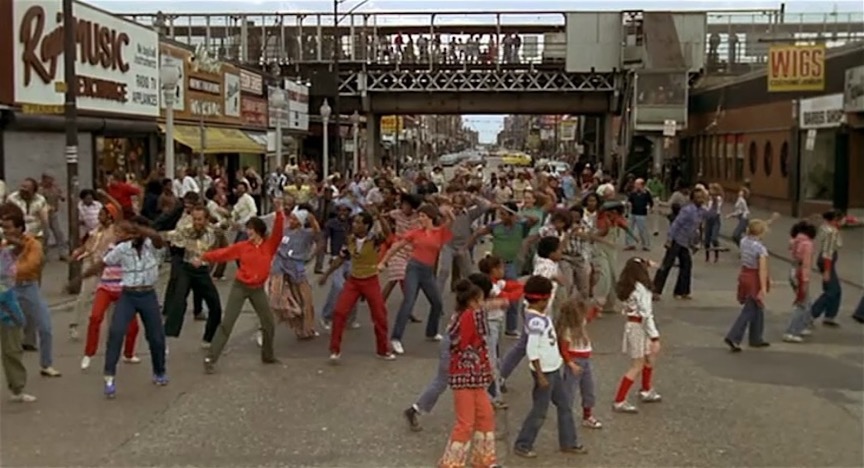
Figure 1: Calumet City breaks out in dance. John Landis, The Blues Brothers (1980) 1:02:04
These numbers give way over the course of the movie, however, to musicians playing onstage for an audience: the band's performance at Bob's Country Bunker; the sets by Cab Calloway (again, playing a character) and the Blues Brothers themselves at their benefit concert; the band's final performance of Presley for their fellow inmates.
On one hand, we might identify this as the film literally enacting the transition from the Hollywood musical to Martin's music-film. But on another level, this transition formally maps the shift from something like utopian possibility to a more intractable, but not entirely hopeless, reality principle. The numbers more in keeping with the traditional Hollywood musical give way to more conventional, diegetically explicable ones involving musicians onstage at precisely the moment at which the movie is transitioning into its second generic impulse, which we might identify with the heist film. In the first half the characters and the plot wander, with Jake and Elwood's effort to reunite the band providing a loose framework, as befits the musical. In the second half, however, the pair is fully committed to their "mission from God," and especially after the benefit concert they face down a ticking clock as they attempt to get the concert's proceeds to the Cook County Assessor in time to save the orphanage.
Anna Kornbluh, drawing on Fredric Jameson, has compellingly argued that the heist film, in contrast to the more individualistic "grift docudrama" that has recently superseded it, is at its core a "utopian-realist" projection of collective labor.23 These films, she points out, foreground "collective process, centering the planning of a collective act." They narrativize the assembly of collectives "in ways that engage ensemble casts and initiate a structural parallel between the heist genre and the production of film as a medium." And, perhaps most importantly, they "generally involve the ideological project to change the existing social allocation of resources and power."24
Jake and Elwood's plan to reassemble the Blues Brothers and earn enough money to pay their childhood orphanage's tax bill, while it admittedly proceeds in a more goofy and haphazard manner than the typical elegant heist, fits this bill. But the way in which Landis's movie sets its heist against the musical foregrounds the difference between the utopian as such and what Kornbluh usefully calls the "realist-utopian." Kornbluh draws her account of the heist genre's meta-filmic nature from director Steven Soderbergh's comment elsewhere that "Heists are so much like making a film. You're getting a gang together, there are external forces beyond your control. This may work, this may not. You could end up in movie jail."25 Soderbergh's reminder here of the way things could go wrong crucially highlights not only collective organization but also the forces arrayed against it. If the musical represents the medium's capacity to suggest utopian visions of reality via form, the heist film represents reality's revenge in the form of all the things that can go wrong in the process of a complicated, collective endeavor like robbing a casino or making a movie. Directors of heist films and films that draw on their conventions frequently make this connection within them. In Mario Monicelli's 1958 I soliti ignoti (Big Deal on Madonna Street), for instance, a plan to rob a pawn shop involves Marcello Mastroianni's character, Tiberio, filming the shop from a nearby rooftop to obtain the combination of its safe. When a series of accidents prevents Tiberio from capturing the combination, he and his compatriots must seek help from a safecracker out on parole. In Jordan Peele's 2022 Nope, meanwhile, the heist itself takes the form of an attempt to film an alien that disrupts electrical equipment with the help of cinematographer Antlers Holst (Michael Wincott) and his hand-cranked camera. Once again, the plan goes awry: Holst gets the shot, but it is lost when he and his camera are consumed by the alien. All of these instances foreground the contingencies of the material world — timing, lighting, the obduracy of matter — that necessarily interact with the drive towards pure formalization that reaches its pinnacle in the unmotivated spectacle of musicals.
It's crucial to note that The Blues Brother's second-act generic shift doesn't quite suspend the utopian and spectacular elements of the first act as transpose them into the new key of the Hollywood blockbuster. The assessor is played, in a famous cameo, by Steven Spielberg, who had directed Belushi and Ackroyd a year earlier in 1941. And we can understand the way in which the scene shot by dropping a car from a helicopter seems to defy continuity editing (we see the vehicle sailing off an uncompleted highway ramp, then falling from a height above the then-Sears Tower that it could not possibly have achieved) as a nod to the same irrealism that we associate with characters in musicals breaking into song and dance. But here the irrealism is not bodies moving through space in the way that Mast understands as an intimation of different ways of organizing collective life. Rather, it's a form of release wrapped in the action-movie aesthetic of destruction that ultimately changes nothing: a display of what is possible for those with money and power. Power, here, in the form of Universal fixer Sydney Korshak, who greased the filming of The Blues Brothers via his connections with the Chicago mayor's office; and in the form of hometown hero Belushi, who was so popular with the Chicago Police Department that he could use them as an unofficial taxi service.26 In contrast to what Kornbluh terms the heist-genre's "counter-social logic," The Blues Brothers is not so secretly in cahoots with the social order. And in contrast to the genre's deep investments in "planning" and "organization," The Blues Brothers' dramatized ethos (as opposed to its conditions of production) is quite literally move fast and break things.27

Figure 2: The Illinois Nazis drive off an unfinished overpass... John Landis, The Blues Brothers (1980) 1:56:54
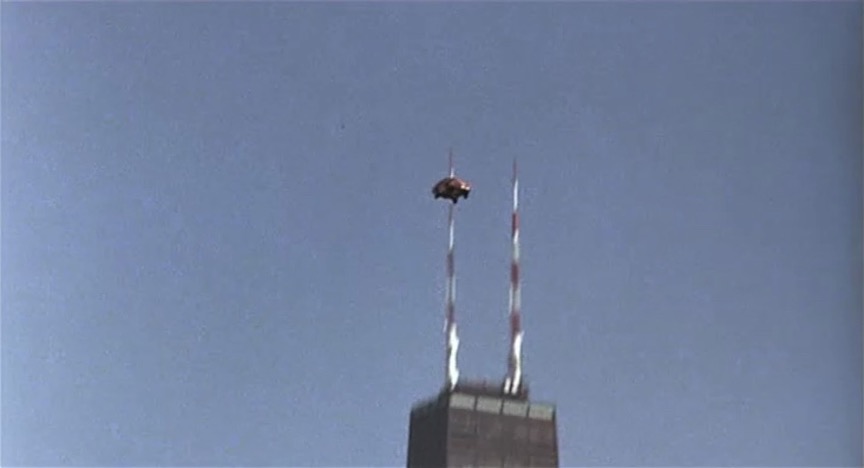
Figure 3: ...and find themselves falling past the Sears Tower. John Landis, The Blues Brothers (1980) 1:57:10
Hence the movie's conclusion, which returns the band — which has destroyed millions of dollars in civic property in order to pay the orphanage's $5,000 tax bill — to Joliet, where they perform a final number that safely enshrines what's left of the musical's utopian power behind prison walls.28 Everyone dances, whether white or Black, prisoner or corrections officer. Of course, everyone is a man, although the movie doesn't necessarily see this as a limitation, since in some ways it's what it's always wanted: a space whose utopianism is defined by the ability of white and Black men to make and enjoy music together. That utopianism depends upon a specific understanding of the 1960s, one we can begin to unravel by starting with the fact that the scene that marks its midpoint genre shift crucially involves a song released in 1968.
It's not any song we're expecting from the catalogue of those released in that year that have come to signify what we conventionally think of as the sixties: not the year's number one song, "Hey Jude"; not "Sittin' on the Dock of the Bay" (#4) or "Mrs. Robinson" (#9). It is Tammy Wynette's "Stand by Your Man."29 I'd wager that many people who've seen The Blues Brothers remember this scene even if they don't remember much else from the movie. The band has been driving, for some reason, on the outskirts of Kokomo, Indiana when they come across a honky-tonk called Bob's Country Bunker. Thinking about the funds they need to save the orphanage, they claim to be the Good Ole Boys, the band scheduled to play that night, and take the stage. At first, they launch into their regular set, beginning with the Spencer Davis Group's 1966 "Gimme Some Lovin'." The all-white crowd reacts poorly, throwing beer bottles at the stage, and the manager cuts the lights. The band racks their brains for country songs they know and come up with Frankie Laine's theme song for the 1959-1965 television show "Rawhide." This wins the crowd over, and Jake and Elwood follow up with an out-of-tune duet on "Stand by Your Man." It turns out to be a huge hit with the crowd: heterosexual couples draw closer together, and a man in a CAT hat similar to the one that Jerry Reed's Cledus Snow wore in Hal Needham's 1977 Smokey and the Bandit openly weeps. Cut to the band finishing up their set with a reprise of "Rawhide," then beating a hasty retreat when they learn that they owe the bar owner $100 for the beer they've drunk in excess of their performance fee for the evening.30
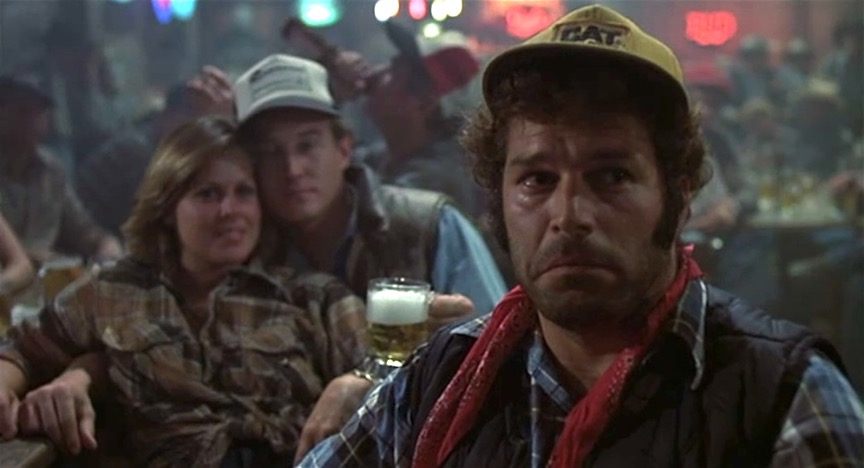
Figure 4: The audience at Bob's Country Bunker. John Landis, The Blues Brothers (1980) 1:13:44
In 1968, Wynette was in Nashville making "Stand by Your Man" with an equally famous producer, the creator of the "countrypolitan" sound Billy Sherrill. Wynette's (and country music's) positioning in opposition to the counterculture became part of the song's marketing campaign: Epic Records took out an ad in Billboard calling it "TAMMY WYNETTE'S ANSWER TO WOMEN'S LIB." Wynette's milieu was, moreover, far from the interracial one that The Blues Brothers implicitly celebrates. As her biographer Jimmy McDonough notes, Wynette was concerned about the song's high, sustained final note, which she worried made her sound "like a rhythm and blues singer."31 With this in mind, it's not entirely surprising that The Blues Brothers not only plays the band's performance in Bob's Country Bunker for laughs, but represents it as the breakdown of the choreographed collectivity represented by the Black churchgoers, the female office-workers, and, finally, the entire town of Calumet City in the numbers featuring Brown, Franklin, and Charles. The band's out-of-tune singing marks that they are performing the song as a goof; the crowd mostly remains seated, indulging its sentimentality and still throwing beer bottles, but now in approbation. The scene ends with the real Good Ole Boys, having finally arrived for their gig, joining the pursuit of the Blues Brothers. Bob's Country Bunker earns its name, as we see country musicians line up on the same side as the Illinois Nazis.
On one hand, this is a simple assertion of the white hipsterism that Saturday Night Live played a key role in establishing. It's anticipated in the movie by the scene in which the musician Murphy Dunne, playing a former Blues Brother who now fronts a lounge act called Murph and the Magic Tones, tells his bored-looking audience, "Don't you go changin'," and puts on a Muzak version of Billy Joel's "Just the Way You Are" before taking a set break to talk with Jake and Elwood about rejoining the band. This scene is itself an homage to Bill Murray and Paul Shaffer's recurring Nick the Lounge Singer sketch, most famous for Nick's rendition of the Star Wars theme. But The Blues Brothers' objection to "Stand by Your Man" in particular also replays what became, over the course of the 1970s, the standard liberal account of the Republican Party's triumphant capture of former Democratic voters in the working class and the US South. This account underlies The Blues Brothers' portrayal of the audience at Bob's Country Bunker as boorish and narrow, uninterested in hearing Black-coded music but delighted by a country song associated with backlash and the maintenance of proper gender roles.
The Blues Brothers, of course, sides with the spirit of the sixties. Yet it's crucial to note that the sixties that the movie idealizes is not at all the political sixties associated with the end of the decade. Rather, it's one organized around the film's covert obsession with Stax Records, the famous Memphis record label — or, more accurately, with the first phase of Stax's existence. This was the period from 1961 to 1968 when both the label's staff and its famous house band, Booker T and the MG's, provided models of interracial fraternity. It is no accident that the MG's' two white members, the guitarist Steve Cropper and the bassist Donald "Duck" Dunn, play members of the Blues Brothers' backup band in the film. This was a role they had played on the band's debut performance on Saturday Night Live in 1978, just as they had on Sam & Dave's 1967 version for Stax. During the SNL performance, Belushi shouts "Play it, Steve," in imitation of the original. Cropper and Dunn were legendary session musicians, and Cropper co-wrote "In the Midnight Hour," which Wilson Pickett recorded at Stax, and "Sittin' by the Dock of the Bay," which became Otis Redding's posthumous breakout hit. In the context of The Blues Brothers, Cropper and Dunn provide historical confirmation of the idea that white musicians can hang with Black artists.
If this is The Blues Brothers' primal fantasy, then it is a version of the sixties that itself fell apart in 1968: in particular, following the April 1968 assassination of Martin Luther King at the Lorraine Motel in Memphis, where Stax employees frequently hung out and where King had travelled to support the city's striking sanitation workers. Jim Stewart, the co-owner of Stax, helped employees move equipment out of the studio after the assassination for fear it would be damaged in the riots that ensued, and in the years after the event he reported that "working relationships came to be tainted by suspicion and withdrawal."32 Isaac Hayes — prior to 1968 known primarily as an in-house songwriter, session musician, and producer for Stax — reported feeling creatively blocked after the assassination until he remade himself, in the early 1970s, as a more politically engaged and formally experimental artist in his own right.33 In his 2016 Guardian obituary for Chips Moman — a Stax employee who left Memphis in 1964 for Nashville, then returned to work at American Sound Studio until it closed in 1972 — Richard Williams writes that "The tensions following the murder ... four years earlier had begun the disintegration of the creative collaboration between black and white musicians on which the international success of the Memphis scene had been built."34 When American Sound folded in 1972, Moman left for a very successful third career act as a producer of country hits in Nashville.
The Blues Brothers, not to put too fine a point on it, is nostalgic for the versions of Stax Records, and the sixties, that were in place when Belushi (b. 1949), Landis (b. 1950), and Ackroyd (b. 1951) were preteens. In that respect, the movie recapitulates George Lucas's surprise 1973 smash American Graffiti, which sets its series of bittersweet coming-of-age stories on one night in 1962, and in its concluding series of textual postscripts reveals how its male protagonists fell victim to the (implicitly equivalent) threats of Vietnam and suburbia. Booker T and the MG's' 1962 "Green Onions" appears over Lucas's climactic drag race scene, and Landis would copy Graffiti's textual postscripts in 1978 for his own 1962-set National Lampoon's Animal House, Belushi's first film.
If Hollywood changed a lot over the course of the 1970s, one thing that remained consistent was the story it told about the 1960s. This was a story grounded in nostalgia for a prelapsarian version of the decade, which turns out to be a version without politics. 1968, as the year of multiple assassinations and the Chicago Democratic convention and Nixon's victory, frequently marks the end of this version of the decade, just as 1962 — the year before Kennedy was assassinated — marks its apotheosis.35 Where The Blues Brothers differs from Lucas's New Hollywood version of this story as a fall is that it seeks to provide a way back: a Paradise Regained in which getting the band back together restores the easy fraternity and cross-racial aesthetics, unmarred by political conflict, of the early decade. The thing that must be sacrificed to achieve this pastoral is country music, which in its association with racism both elevates the politics of cross-racial brotherhood and blames the white working class for their failure. Linked to country music, class is reduced to a set of attitudes about race: to be working class means to like country music means to be racist, while bourgeois hipster taste is defined by its anti-racism. Two things follow: first, the liberal reaction to the Republican party's Southern strategy, so far from contesting this political realignment, reinforces its effects by writing off working-class voters as inherently racist; second, anti-racism is itself detached from material (class) concerns and reduced to cultural appreciation. The latter is the "figurative rather than . . . literal means of seeing color" that, according to Szalay, liberal postwar writers borrow from rock music and adopt as a basis for Democratic Party politics. Its flipside is the simultaneously classist and class-effacing contempt for country music that reconfigures working-class identity in cultural terms.
All of this follows more or less directly, I'd like to suggest, from The Blues Brothers' opening shot of steel mills. The film's surface-level misogyny — instanced most directly in Carrie's Fisher's role as Jake's homicidal ex-lover, but also apparent in the shift from the basso profondo "Rawhide" to the falsetto "Stand by Your Man" — is not incidental to its effacement of class politics, especially if we understand Fisher's demurely dressed, weapon-wielding white woman as a Patty Hearst-esque call-out to the standard story of the late 1960s descent of political activism into Weatherman-style violence. The film's treatment of both Fisher's character and Wynette's song reflects, on some level, its nostalgia for the industrial economy and its presumptively masculine working class of factory laborers. The cost of this nostalgia, as The Blues Brothers demonstrates, is a failure to see the ongoing presence of working-class militantism in the politics of the 1970s and (much more flickeringly, to be sure) in country music as well.
The Blues Brothers' dematerialization of class politics becomes most visible in the moment when it invokes the institutions most identified with material gains for the postwar US working class: unions. As Jake and Elwood prepare to skip out on their bar tab at Bob's Country Bunker, the real Good Ole Boys drive up in their RV, and Jake tells the Boys' lead singer Tucker McElroy (Charles Napier), "My name is Jacob Stein, the American Federation of Musicians Union Local 200. I've been sent here to see if you gentlemen are carrying your permits." McElroy responds,
Suppose we ain't got no union cards and we go in there and start playing anyway, now what you gonna do about that? You gonna stop us? Stein. [Chuckles.] You're gonna look pretty funny tryna eat corn on the cob with no fuckin' teeth.
Jake then offers to intervene with Bob and get the band "contract waivers" for the night's show, and after telling McElroy to stay where he is while he handles things, takes off with Elwood.
Here the movie might seem to make both class and race visible: McElroy is problematic not only because of his racism — here marked by his ominous emphasis of Jake's assumed Jewish last name — but also because he doesn't like unions. While The Blues Brothers helped launch the 1980s explosion of filmed-in-Chicago movies in part through its demonstration of the value of the sweetheart deals Illinois unions were willing to cut, the joke in this scene is the standard one that unions are sites of red tape and bureaucracy that get in the way of people doing their work. Here unions join the police as another version of The Man that the movie's freewheeling protagonists continually fuck with. The unintentionally ironic joke within the joke is that it's being made in a film deeply beholden to the flexibility of both groups.
In this way The Blues Brothers recapitulates, and subtly recasts, the history of Hollywood's evolving relationship with unions in the 1970s, as described by Derek Nystrom in his book Hard Hats, Rednecks, and Macho Men. Nystrom points out that 1970 not only saw the "hard hat riots,"36 in which a group of construction and office workers attacked an anti-war protest in New York City, but also "marked the high point of the strike wave that rose and crested through the late 1960s and early 1970s."37 But filmmakers increasingly associated with the counterculture were more interested in the hippie-bashing working class than the militant one, turning out movies like Easy Rider (Dennis Hopper, 1969) and Joe (John G. Avildsen, 1970) in which working-class characters enacted lethal violence on members of the counterculture.
This depiction of unionized workers had its material concomitant. As Nystrom notes, many New Hollywood filmmakers got their start working on non-union sets like those of Roger Corman, and "Joe's hippie-hating title character may have been inspired as much by the aging members of the exclusionary film unions as by the working-class supporters of George Wallace."38 At the same time, the "romantic" New Hollywood notion of filmmaker-as-auteur helped to efface the specifically working-class sectors of film production.39 Meanwhile, technical innovations in camera design that made on-location shooting more feasible helped spur the same sort of exodus to the non-unionized South that would subsequently be used to break unions in the steel and other manufacturing industries, a move that would become visible over the course of the 1970s in the "shift from the murderous, degenerate rednecks of Deliverance to the playful, fast-driving good ole boys of Smokey and the Bandit."40
The Blues Brothers inherits this shift — indeed, the parts of the film's extended chase sequence involving the Good Ole Boys openly reproduces the hijinks of Needham's box office hit of three years earlier — but because it got its breaks from the ready-to-deal unions of Illinois, it doesn't need to play as nice with white Southerners. Instead, its Good Ole Boys can be part of the chase alongside the police and the Illinois Nazis. As with Belushi's cozy relationship with the Chicago PD, the movie gets to have its cake and eat it too, in this case by taking advantage of unions' flexibility while projecting anti-union sentiment onto the country music performers already associated with racism.
This complicates the way in which the movie's opening shots set it up as a kind of elegy for the industrial South Chicago they depict. The movie's central narrative of getting your buddies back together — of saving them from jobs as cooks and entertainers and restoring them to meaningful labor — resonates, that is to say, with the long post-1968 decline of the US industrial economy and the union strength it undergirded, even as it can only produce the romanticized professional-managerial ethos of aesthetic production — the movie's band is by no means a union one — central to the New Hollywood cult of the filmmaker and neoliberalism as such. And indeed, one point the movie asserts quite emphatically with its Spielberg cameo is that, from the point of view of Hollywood history, we haven't really left New Hollywood at all, just replaced the auteur conversant in foreign cinema with the man behind the curtain orchestrating the special effects.
The Blues Brothers, that is to say, inherits a cynicism about unions that is deeply baked into Hollywood by 1980. And perhaps the fact that the movie received considerations from unions through a combination of Hollywood economic power, Chicago machine politics, and Belushi's status as a home-grown hero rightly reinforced this cynicism. Of course, the model of people with the ability to sidestep institutional restraints dedicating themselves to tearing down institutions leads, on one level, directly to DOGE and the current dismantling of the federal government. But it would be wrong to associate The Blues Brothers with this version of downstream politics: the movie is a love letter to Black culture and (through its invocations of Stax prior to 1968) to a particular version of cross-racial male fraternity built around a shared commitment to that culture.
Yet as I've suggested, the movie isn't just anti-union, it's anti-working class, insofar as it understands the members of this class not as people who work, but as people who like country music. Here it's useful to turn to another, earlier use of "Stand by Your Man" in a Hollywood film: its appearance at the start of Bob Rafelson's 1970 Five Easy Pieces. A hallmark of New Hollywood cinema, Rafelson's movie features Wynette's song over the opening credit sequence in which Jack Nicholson's character Bobby Dupea drives home from his job at a Bakersfield, California oil field. When Dupea arrives home the song becomes diegetic, as we see it playing on the phonograph of Dupea's aspiring country singer girlfriend Rayette Dipesto (Karen Black).
As those familiar with Rafelson's film know, about a third of the way in we discover that Nicholson's character is not in fact working-class in origin, and he sets off for his classical musician family's Pacific Northwest compound with Rayette in tow. Rafelson's movie, as Nystrom notes, depicts Dupea's character as fitting into neither class, a tension resolved only at the level of form in the movie's conspicuous deployment of "the culturally privileged filmmaking strategies that would come to signify the New Hollywood.... — a deployment that, in turn, seems at odds with the film's implicit critique of the class privileges such resources provide."41 If, that is to say, the movie offers a narrative seemingly in favor of dropping out from the upper middle-class world of aesthetic labor represented by Dupea's family, it totally affirms that world at the level of the narrative's elliptical telling and the cinematography with which it is shot. Insofar as the movie's opening associates Wynette with Rayette, and depicts Rayette as an object of Dupea's condescending scorn, Five Easy Pieces just like The Blues Brothers associates country music with a version of the white working class that it ultimately defines its own values against.42 The feeling seemed mutual: Rafelson invited Wynette to the premier, and, as he subsequently said, "She didn't much like it. I think the movie was kind of an art movie — and 'art movie' she was not."43
The Blues Brothers goes even further than this affiliation of class status with country music, directly associating country music with racism. This is a project whose groundwork was, of course, laid by liberal reactions to the Republican Party's invocations of the Silent Majority. Insofar as The Blues Brothers configures white-working class identity as inherently racist, and bourgeois hipsterism as inherently anti-racist, it perfectly encapsulates a particular moment in the long post-1968 trajectory of the Democratic Party and US liberalism more generally.
I'd like to end, however, by suggesting that The Blues Brothers doesn't entirely erase questions of class — although these show up in a place where the ideological complex I've been tracking here, and the movie's own plot, encourage us not to look. Here I want to return briefly to the musical number in which Aretha Franklin, playing Matt "Guitar" Murphy's wife, performs her song "Respect" in response to Jake and Elwood's attempt to lure Murphy away from the couple's restaurant business and back to the band. This is another of the film's misogynistic moments, insofar as it positions domesticity, Huckleberry Finn-style, as yet another obstacle to masculine self-fulfillment.
But for the purposes of the number, Franklin is joined by a group of Black female diners who get up from the counter to act as her back-up singers. These women are listed in the credits as the Soul Food Chorus. One (Carolyn Franklin, Aretha's sister) is dressed casually, but the other two are dressed for work: Margaret Branch for a clerical job (she shares with Franklin a literal pink collar), Brenda Bryant Corbett in a postal worker's uniform. The women are probably on their lunch hour.
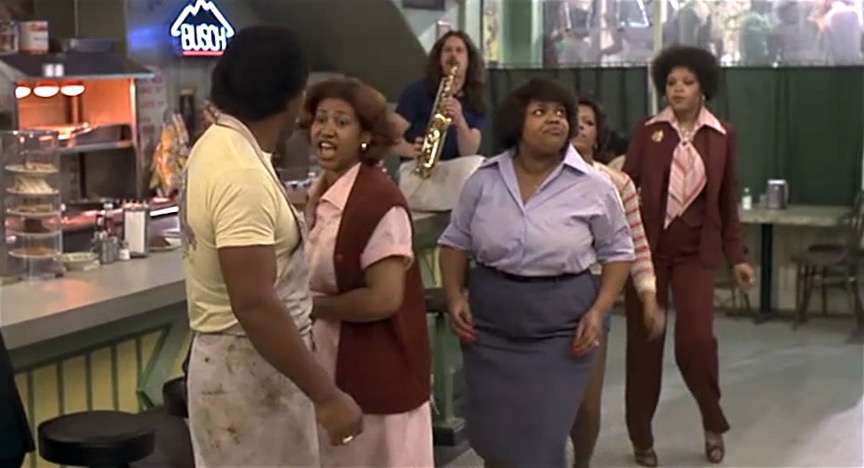
Figure 5: The Members of the Soul Food Chorus backing up Aretha Franklin. John Landis, The Blues Brothers (1980) 54:36
This could be the case simply because the women serve, like Franklin, as representatives of the workaday world to which they seek to keep Murphy tied. But it's also a reminder that there is a world of working-class labor beyond the mostly male factory jobs central to nostalgic discourse about the postwar economy. Corbett's postal worker is especially important here, insofar as she is one of the few characters in the movie who is almost certainly a member of a union. In addition to their relatively high levels of pay and prestige, Adam Fairclough notes, Black postal service workers were "unique among black wage earners" in that "federal civil service regulations protected them from arbitrary dismissal and gave them some means of redress against discrimination."44 As a result, Philip Rubio notes in his book There's Always Work at the Post Office, postal service work was both "an avenue of black mobility and incubator of black struggle."45 Such struggle, Rubio stresses, included not only the fight for civil rights but also efforts to organize workplaces, such as the 1970 wildcat strike that led to the granting of collective bargaining rights to the unions that represented postal workers. Focusing on such struggles, Rubio argues, offers a different slant on labor history than the traditional emphasis on factory workers, and indeed Nixon — at the very time he was supposedly bringing industrial workers forever into the Republican fold — called up the army and the National Guard in an effort to move the mail and break the postal strike.46
From this perspective it thus appears significant that while Frank Oz's corrections officer, probably also in a union, provides the movie's first version of the union/bureaucracy joke, Corbett's postal worker appears instead in one of the choreographed collective actions that we have heretofore associated with the musical as genre but that we might now, without too much stretching, understand as paralleling the form of direct action that is the strike. 47
But not quite, as it turns out. If The Blues Brothers' guiding emotion is a nostalgia for a certain brand of meaningful male work associated with steel mills, its primary referent for this nostalgia is not such mills, but rather Stax Records. And this is a version of solidarity premised not on any form of workplace organization, but rather on the ability of certain white people (primarily men) to appreciate and even participate in Black culture. This appreciation was already one-sided enough, as the history of Stax following the King assassination suggests. But The Blues Brothers transforms it into a literally mystical quality: during the church service presided over by James Brown's minister, Belushi's Jake is struck by a beam of light and goes cartwheeling down the center aisle. This in turn suggests the ultimate problem with the musical as the movie's guiding formal structure. On one hand, musical numbers are as much about organization as heists are. But on the other hand, they for the most part (the most obvious exception being backstage musicals) present this organization as something that occurs spontaneously, rather than something that has to be laboriously built. This means that you either get it, or you don't. In this regard, Corbett's postal worker doesn't get it because she's a Black woman in solidarity with Franklin's fellow Black woman — a solidarity here understood as holding back the Black and white men who just want to play music. Of course, Lou Marini, another member of the band who works in the kitchen, comes out to play saxophone, and eventually even Jake and Elwood get up from their seats and join the choreography. The gender antagonism here is ultimately resolvable, at least for the duration of the number — or, from another perspective, to the extent that Aretha Franklin's character is not in fact that character, but Franklin herself and everything that she signifies in the history of Black music.
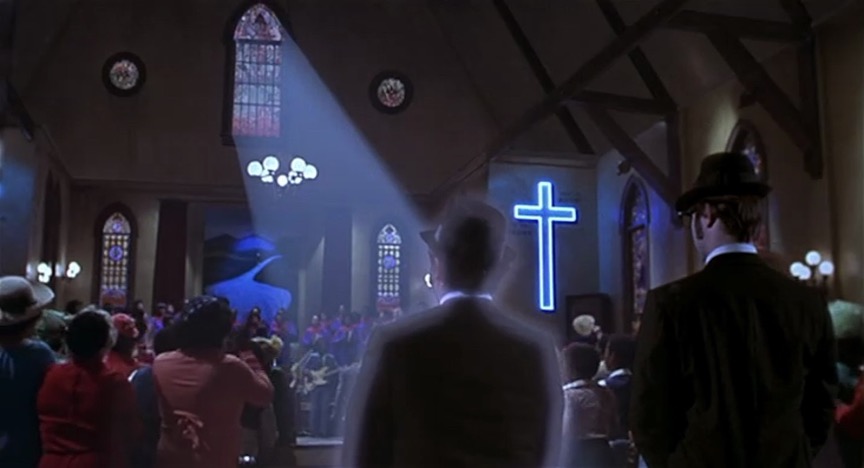
Figure 6: Jake Elwood is chosen. John Landis, The Blues Brothers (1980) 19:03
The group that also doesn't get it — and will never get it — is the audience at Bob's Country Bunker, because the movie's project is not just articulating nostalgia for a version of the past but identifying who is responsible for its demise. And this is not, say, white liberals who exploit Black and white members of the working class alike for professional gain (as the great Chicago movie of the late 1960s, Haskell Wexler's 1969 Medium Cool, proposes) but the members of the white working class who turned from Memphis and Motown to Nashville, from FDR and Kennedy to Nixon. These are, of course, two distinct shifts that histories of the 1970s both take for granted and understand as somehow fundamentally connected. The Blues Brothers works to reinforce this conflation, in ways that pretty accurately predict the Democratic party's own decades long abandonment of working-class political issues in favor of facile expressions of cross-racial solidarity. It's no abandonment if the white working class has already walked away in favor of Nixon, Reagan, and MAGA.
As Justin Mitchell argues in his excellent essay on Sam Greenlee's 1969 The Spook Who Sat by the Door, Greenlee exposes how the politics of hipsterism already served a PMC class project in the 1960s — in this case for members of the Black PMC like Greenlee's protagonist Dan Freeman. Mitchell argues that Greenlee depicts Freeman's commitment to jazz and other markers of authentic Black culture as evidence of "his commitment to Black communitarianism over and against the tokenism of racial democracy" and of his purportedly revolutionary ability "to suture the socioeconomic rift that emerged among Blacks in the aftermaths of the Civil Rights movement, deindustrialization, and urban decay."48 Mitchell contends, however, that "despite its spirited attacks on the Black petit bourgeoisie, the novel nonetheless proposes that the realization of collectivism ultimately depends on the willingness of the socially mobile few to wield their class power in the interest of the many." As a result, The Spook Who Sat by the Door, "to the extent that it imagines the hip PMC as a kind of revolutionary vanguard," offers a "psuedo-Leninist" version of Booker T. Washington's politics of working-class uplift mediated by supposedly enlightened elites.49 We can understand The Blues Brothers' romanticized conception of Black musical authenticity as similarly putting a working-class gloss on the Democratic Party's project of reorganizing itself around a multi-racial PMC.
But as Mitchell reminds us, we shouldn't just read Greenlee's novel as a carrier for bad ideology. Rather, "its failure is ... profoundly instructive,"50 particularly to the extent that "it acknowledges that, with the rise of the Black PMC and the concomitant collapse of traditionally Black urban communities, class has become the primary fault line in Black American life."51 Something like the ongoing primacy of class subtends The Blues Brothers' own hipster fantasy, for evidence of which we might point, among other places, to the film's misreading of "Stand by Your Man."
In emphasizing the sentimental reactions of the couples in Bob's Country Bunker, the movie casts Wynette's record as a love song, thus reinforcing its status as a traditionalist riposte to the counterculture. Sherrill, however, also said of the song that he "always wanted to write a song about a woman talking to another woman." He'd return to this even more explicitly for Wynette's 1974 song "Woman to Woman," for which Epic took out another ad in Billboard apologizing for its earlier ad. The second-person address in "Stand By Your Man," that is, is not to a male lover, but to another woman with a male lover. This was in line with Sherrill and Wynette's plan — spurred by an Epic Records poll that said that 55 to 65% of country records were bought by women between 22 and 45 — to write songs for female listeners.52
Moreover, while the song's title suggests that it is an advice song — do this to be successful — the famous first line offers instead commiseration: "Sometimes it's hard to be a woman." A gerund phrase specifies that what is hard about being a woman is "giving all your love to just one man" — presumably because he will not reciprocate, but will have "good times" while you have "bad times," behaving in a way that challenges your understanding. A conditional suggests, though, that if you love the man, then "you'll forgive him," despite this difficulty. The word "understand" appears at the end of two lines in a four-line sequence, suggesting that it is the opacity of men's behavior that is really at stake. But again, the conditional: if you love the man, you must not only forgive him but also actually be proud of him. All this leads to the song's most discussed and ambiguous line, putatively improvised by Wynette during the session: "'Cause after all, he's just a man." That's the verse, the only one we get. Then come three repetitions of the chorus, each beginning with the song's title, the first advising the listener to provide physical comfort "when the nights are cold and lonely" and the second and third making explicit the outward turn implied by the injunction to be proud: "And show the world you love him."
Throughout, the song's traditionalist advice to stand by one's man is exceeded by its lament for how difficult this is. With this in mind, we can perhaps best understand "Stand by Your Man" not as a love song or an advice song but rather as an example of a venerable country genre that underwent a renaissance in the 1960s: the work song. Wynette's concerns about the final line extended beyond her fear that she'd be taken for Black: she was also afraid she was "going to have to hit that God-awful high note the rest of my life."53 The implicit conflation of race and labor here should remind us of the key promise that racist ideology makes to poor white people: that even if their labor makes them lower class, they remain members of a privileged race. But it should also remind us why the work song was perhaps the most popular country genre of the 1960s, and why a song about relationships might turn into a work song. Although we've largely forgotten it, the 1960s were the culminating decade of both Black and white migration North in search of industrial jobs. These two groups increasingly worked in the same factories — if not always at the same jobs — in places like Chicago and Detroit, and while this involved tension it also offered at least the potential for cross-racial solidarity in labor organization.
In 1975 Sue Tyrell wrote a piece for the British feminist magazine Spare Rib arguing that Wynette was "spearheading the inevitable backlash to the women's movement" by depicting womanhood "as not only the most fulfilling occupation, but the only occupation."54 Ironically, Tyrell's own subtitle — "Peroxide Politics and the Counter-Revolution" — itself hints at one of the other jobs Wynette held prior to moving to Nashville in January 1968: as a beautician. When she left her first husband and moved to Birmingham, Alabama in 1964, Wynette had to go back to beauty school to replace her no longer valid Mississippi State license, hiding her pregnancy. She got re-licensed and worked eight-hour shifts at a Birmingham salon while also appearing on a local country music television show.55 Although Wynette experienced life-long health problems stemming from the stress of this period, she reputedly renewed her cosmetology license every year, even after she became famous, just in case she needed a fallback. 56
If we think about "Stand by Your Man" as a song about labor informed by Wynette's experiences, we suddenly understand that, far from being nostalgic, it's a song about the future: a future in which care work would become more central to the US economy and thus the primary front for labor organization.57 This is, we might say, the material register of the working class's transformation that comes back to disrupt The Blues Brothers' own ideological heist on behalf of a postwar liberalism anxious to project its own failures onto a vision of racist working-class self-betrayal.
Andrew Hoberek is Professor of English at the University of Missouri. He is working on a book on 'Stand by Your Man,' country music, and the 1970s."
Banner Image taken from Tammy Wynette's appearance on the Johnny Cash Show in 1970 (via YouTube).
References
Thanks to Stephanie Shonekan, Walter Benn Michaels, Mark Goble, the anonymous readers at Post45, and — especially — J. D. Connor for their thoughtful comments on earlier versions of this essay. As always, any bad stuff that got past them is solely the fault of the author. Thanks to Brad Prager for his help with the images.
- I take my car destruction statistics from Jim Gorzelany, "The Movies And Actors That Crashed The Most Cars In Film History," Forbes, June 29, 2021.[⤒]
- "Scene 1," Chicago Tribune, December, 20 1987.[⤒]
- "The Illinois Film Tax Credit," Illinois Production Alliance, accessed June 22, 2026.[⤒]
- Gabriel Winant, The Next Shift: The Fall of Industry and the Rise of Health Care in Rust Belt America (Harvard University Press, 2021).[⤒]
- See, for instance, Philip Shabecoff, "Voter Shifts and Conservatives' Gains Worry Labor," The New York Times (9 November 1980): A30.[⤒]
- Michael Szalay, Hip Figures: A Literary History of the Democratic Party (Stanford University Press, 2012), 5-7.[⤒]
- For detailed accounts of how this understanding influenced the production and reception of culture in the 1970s, see Derek Nystrom, Hard Hats, Rednecks, and Macho Men: Class in 1970s American Cinema (Oxford University Press, 2009) and Jefferson Cowie, Stayin' Alive: The 1970s and the Last Days of the Working Class (The New Press, 2010).[⤒]
- Szalay, Hip Figures, 280.[⤒]
- Cowie, Stayin' Alive, 256-67.[⤒]
- Here and in what follows I use "the 1960s" to designate a specific time period, and "the sixties" to designate cultural mythmaking about the period.[⤒]
- Bruce DeMara, "Local Legends: The Queen East 'key club' where the Blues Brothers were born," Toronto Star, July 22, 2017; Ned Zeman, "Soul Men: The Making of The Blues Brothers," Vanity Fair, January 2013.[⤒]
- Szalay, Hip Figures, 124.[⤒]
- See Eric Weisbard, Hound Dog (Duke University Press, 2023).[⤒]
- Richard Dyer, "Entertainment and Utopia," in Only Entertainment, (Routledge, 1992), 20.[⤒]
- Gerald Mast, Can't Help Singin': The American Musical on Stage and Screen (The Overlook Press, 1987), 13.[⤒]
- Mast, Can't Help Singin', 89.[⤒]
- Mast, Can't Help Singin', 98.[⤒]
- Rick Altman, The American Film Musical (Indiana University Press, 1987), 69.[⤒]
- Adrian Martin, "Musical Mutations: Before, Beyond and Against Hollywood," in Movie Mutations: The Changing Face of World Cinephilia, ed. Jonathan Rosenbaum and Adrian Martin (BFI, 2003), 98.[⤒]
- Martin, "Musical Mutations," 96.[⤒]
- Martin, "Musical Mutations," 99.[⤒]
- Carol Vernallis, Experiencing Music Video: Aesthetics and Cultural Context (Columbia University Press, 2004) and Unruly Media: YouTube, Music Video, and the New Digital Cinema (Oxford University Press, 2013); Phoebe Macrossan, "Rethinking Singing on Screen: The Case for Contemporary American 'Screensong' across the Film Musical, Music Television and the Music Video," Popular Music 40, no. 2 (2021): 210-229; J.D. Connor, The Studios After the Studios: Neoclassical Hollywood (1970-2010) (Stanford University Press, 2015), 169-184.[⤒]
- Anna Kornbluh, "Falling Heists, Rising Grift: Filming Capital in the Already Long Twenty-First Century," South Atlantic Quarterly 124, no. 4 (2025): 723-24.[⤒]
- Kornbluh, "Falling Heists," 726-727.[⤒]
- Tom Shone, "Steven Soderbergh: 'Film-making is like sex. If I accidentally give someone else pleasure, that's fine,'" The Guardian, August 23, 2017.[⤒]
- Zeman, "Soul Men."[⤒]
- Kornbluh, "Falling Heists," 727.[⤒]
- Compare here the ironic conclusion of George Lucas's 1971 THX 1138, in which the computerized Central Command calls off the robot police attempting to prevent Robert Duvall's titular worker from escaping the dystopian city they inhabit because the destruction caused by the chase (exceptionally tame by the standards of The Blues Brothers) has exceeded the budget allotted for him. If the chase in Landis's movie symbolically gives the finger to the forces of soulless, bureaucratic control depicted by Lucas, it is able to do so because of Universal's backing and the support of Jane Byrne's administration — which, in one further twist of the screw, reputedly allowed the filmmakers to film Jake and Elwood crashing their car through the windows of the recently rechristened Richard J. Daley Center because Byrne saw herself as fighting "the Machine" run by her predecessor Daley. See Dave Newbart, "Mayor Byrne was happy to let Bluesmobile ram Daley Center — part of $3.5M climatic scene in 'The Blues Brothers'," Chicago Sun-Times, June 24, 2020.[⤒]
- "1968," Top 100 Billboard Year-End Archive, accessed June 24, 2026; Holly Gleason, "'Stand By Your Man'—Tammy Wynette (1968)," The Library of Congress, accessed June 24, 2026.[⤒]
- If you follow the logic here, the band's truncated performance of a song by the Steve Winwood-led British soul band The Spencer Davis Group perfectly bridges the transition from the final integrated musical number by Charles, who performs the R&B number "Shake a Tail Feather" but whose 1962 record Modern Sounds in Country and Western Music made him the most successful Black R&B-to-country crossover artist of the era. He was far from the only one, of course: in 1974, for instance, Tina Turner — whose 1968 version of "Shake a Tail Feather" with her husband Ike was probably the most well-known one — would make her first solo album the covers compilation Tina Turns the Country On!, and a version of "Stand by Your Man" from the sessions for this album would make it onto her 1979 follow-up Good Hearted Woman.[⤒]
- Jimmy McDonough, Tammy Wynette: Tragic Country Queen (Viking, 2010), 163.[⤒]
- Francesa D'Amico, "The Revolution Will Not Be Televised, But It Will Be Recorded: Soul, Funk, and the Black Urban Experience, 1968-1979," in The Global Sixties in Sound and Vision: Media, Counterculture, Revolt, ed. Timothy Scott Brown and Andrew Lison (Palgrave, 2014), 185.[⤒]
- D'Amico, "The Revolution" 185-86. See also Jamila Wignot's 2024 documentary "Stax: Soulsville USA," which cites the detail about Stax employees hanging out at the Lorraine's pool.[⤒]
- Richard Williams, "Chips Moman Obituary," The Guardian, June 15, 2016. In his time at American Sound, Moman worked with the white soul band The Box Tops and produced Elvis Presley's 1969 "Suspicious Minds"; it was also where Dusty Springfield came in 1969 to record her album Dusty in Memphis.[⤒]
- If this seems like an overreading, it's worth noting that the scene in Bob's Country Bunker offers another call-out to 1962. When a band member suggests "Rawhide" as a song the angry crowd might like, Ackroyd responds, "The old favorite ... Rowdy Yates" — a reference to Clint Eastwood's character on the show. And in fact, the whole scene at Bob's Country Bunker may be an extended allusion to the 1962 episode of Rawhide entitled "The Pitchwagon." In that episode, the show's cattle drovers rescue a pitchman, played by Buddy Ebsen, from Indians, but one of the drovers dies in the attempt. The pitchman then comes up with plans to put together a nest egg for the drover's family: first a rigged card game, then a concert featuring a woman pretending to be Jenny Lind. When the faux-Lind skips out before her number, however, Eastwood's Yates calms the angry crowd by singing a song called "Beyond the Sun."[⤒]
- Nystrom, Hard Hats, 21.[⤒]
- Nystrom, Hard Hats, 36.[⤒]
- Nystrom, Hard Hats, 51.[⤒]
- Nystrom, Hard Hats, 47-53 passim.[⤒]
- Nystrom, Hard Hats, 96-97.[⤒]
- Nystrom, Hard Hats, 44-45.[⤒]
- If Rayette's first name identifies her with country music, her surname links her to the white ethnic working class that was the other pillar of Nixon's silent majority.[⤒]
- McDonough, Tammy Wynette, 170.[⤒]
- Adam Fairclough, Better Day Coming: Blacks and Equality, 1890-2000 (Viking, 2001), 183. As a number of recent observers have noted, because the Postal Service remains a particular avenue of Black upward mobility, DOGE's efforts to reduce the postal workforce, like its efforts to slash the government civil service workforce more generally, function as an effort to eliminate good jobs for Black people in particular. See, for instance, Gloria Oladipo, "The US Postal Service helped build the Black middle class. Trump could end that legacy," The Guardian, March 11, 2025.[⤒]
- Philip Rubio, There's Always Work at the Post Office: African American Postal Workers and the Fight for Jobs, Justice, and Equality (University of North Carolina Press, 2010), 4.[⤒]
- Rubio, There's Always Work, 4-7 passim.[⤒]
- Illinois corrections officers were organized by AFSCME's Council 31 following Governor Dan Walker's 1973 Executive Order extending collective bargaining rights to the state's public sector workers. See "History of AFSCME Council 31," AFSCME Council 31, accessed June 25, 2026.[⤒]
- Justin Mitchell, "Racial and Social Democracy in Sam Greenlee's The Spook Who Sat by the Door," American Literary History 35, no. 1 (2023): 193-94.[⤒]
- Mitchell, "Racial and Social Democracy," 195.[⤒]
- Mitchell, "Racial and Social Democracy," 190.[⤒]
- Mitchell, "Racial and Social Democracy," 196.[⤒]
- McDonough, Tammy Wynette, 160.[⤒]
- "Stand By Your Man," The NPR 100, NPR, October 28, 2000.[⤒]
- Quoted in McDonough, Tammy Wynette, 156; Tyrell's emphasis.[⤒]
- McDonough, Tammy Wynette, 54-55.[⤒]
- McDonough, Tammy Wynette, 57, 14.[⤒]
- See Winant, The Next Shift.[⤒]
Related reading
 Manifest Diversity and the Empire of Finance
Susan Sontag and the Americanization of the Nouveau Roman
Manifest Diversity and the Empire of Finance
Susan Sontag and the Americanization of the Nouveau Roman
 The Programming Era: The Art of Conversation Design from ELIZA to Alexa
 “The Trouble Spot”: Racialized Paranoia and the Vision of the State in The Spook Who Sat by the Door
Cartoon Viscera
“The Trouble Spot”: Racialized Paranoia and the Vision of the State in The Spook Who Sat by the Door
Cartoon Viscera
 Toward a Trans Fag Phenomenology: the Orientation(s) of Desire and the Afterlives of Lou Sullivan
 Big Color Analytics: Privatization, Precarity, Pantone
Seeing Past Consumption: Race and Species in the Slaughterhouse
Big Color Analytics: Privatization, Precarity, Pantone
Seeing Past Consumption: Race and Species in the Slaughterhouse
 Side Hustle: College Sports and the Future of Academic Labor
Toward a Poetics of the Detainee
Side Hustle: College Sports and the Future of Academic Labor
Toward a Poetics of the Detainee