In a passage from the third volume of Marcel Proust's In Search of Lost Time, the narrator recounts the experience of stumbling upon his grandmother reading in the drawing room, unaware of his presence. He describes the sight as the perception of his own absence. His eyes operate mechanically, without memory, to produce an image not of his grandmother, but simply of an old, tired looking woman. He calls this image a photograph.1 Uncannily severed from intimacy, the photograph, Proust implies, intrudes upon habit by forcing its own nonhuman way of seeing. This is not to say that the photograph is neutral or meaningless, but rather to suggest that its meaning is impersonal. Making a similar distinction in his 1927 essay, "Photography," Siegfried Kracauer contrasts two records of the past: the technological and the memorial. "Photography," he writes, "grasps what is given as a spatial (or temporal) continuum; memory-images retain what is given only insofar as it has significance."2 Memory colors what we see with associative meaning and habitual connections, while photography obscures meaning by being too informative, too legible, too detailed: "In a photograph a person's history is buried as if under a layer of snow."3 Family and personal photographs, in other words, might aspire to bolster memory while actually displacing it.
Bernadette Mayer's writing attends closely to personal experience and memory, but is filled with stray details, resisting the pull of narrative, familiarity, and cohesion. Her experimental poetry incorporates photography to test the limits of the distinctions between bolstered and displaced memory. In poetic works that borrow from the diary or journal form, Mayer becomes an unrelenting documentarian of dailiness, and her work is photographic insofar as its "layer of snow" forms a non-narrative "counter-memory," to link Kracauer and Roland Barthes' terms.4 Formally, her maximalist poetic style counters the interpretive work of lyric reading whereby disparate elements of a poem are folded into a meaningful whole.5 Mayer folds what is nonhuman or mechanical in photography into her experiments in recording the self. In her work, Mayer is curious about precisely what repulses Proust's protagonist in the "photograph" of his grandmother. In what follows, I read works by Mayer that employ elements of diary and photographic records, works that attempt to capture experience as it happens, and then grapple with their failure to do so. I will argue that Mayer's photo-poetic style maintains a sense of lyric intimacy while exposing what is impersonal and opaque in memory.
Mayer's poetry has become known for both its maximalism and its focus on the quotidian. Maggie Nelson writes that Mayer's work "embodies the legacy of the 'open, yeasty, limitlessly permissive' atmosphere of the New York art world at midcentury, along with the Whitmanesque 'aesthetics of monstrous absorbency, total inclusion.'"6 Kristin Grogan and David Hobbs write that "if the last half century has a poet of daily life — of its dreams, babies, children, jokes, meals, sex, love, labors, and writing — she is Bernadette Mayer."7 Mayer's audio-visual installation Memory, especially, is an experiment of the porous, permeable, and expansive self held alongside the quotidian, domestic, and detailed life record, one that plays in the difference between life and its record through photographic (im)mediacy. Emphasizing the importance of photographs to Mayer's poetic experiments, I will begin with a reading of Memory before concluding with a brief study of Midwinter Day to draw out the connections between photography, poetry, and counter-memory.
Memory, originally exhibited as an audio-visual installation and only later published in book form, is an experiment in self-documentation. Every day in July of 1971, Mayer shot one roll of 35mm color film, producing over 1,100 photographs in total.8 After they were developed, sometimes weeks later, Mayer revised her daily journal entries while looking over the photographs, following tangents sparked by details in the images that redirect or overshadow her journal's written record. She then recorded herself reciting the revised entries. The pictures were mounted in a grid, which took up 36 by 4 feet of space when exhibited at the 98 Greene Street Gallery in SoHo.
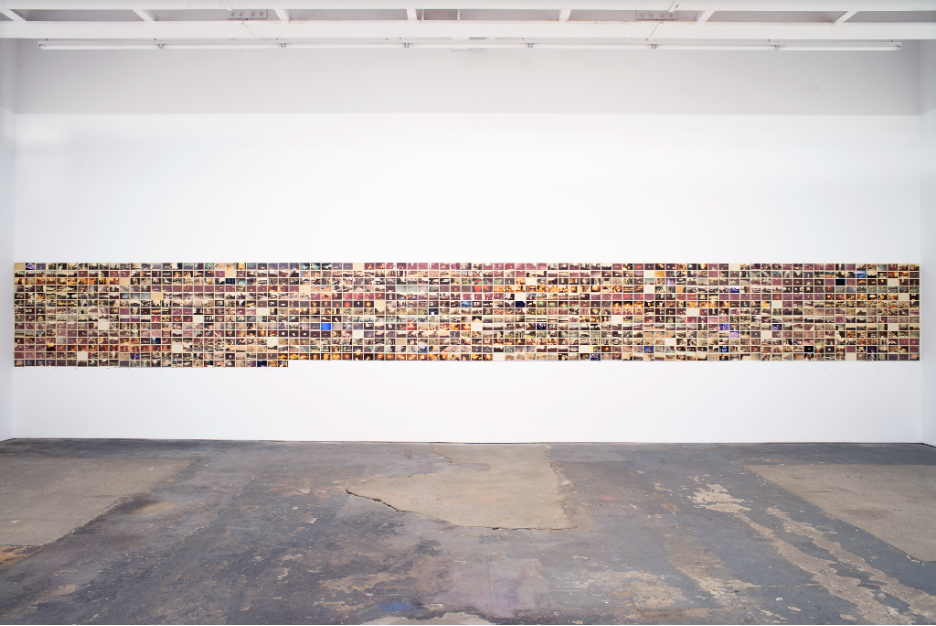
Figure 1: Bernadette Mayer, Memory. Image from Memory exhibited at CANADA Gallery, 2017.
Audiences scanned the images while listening to the eight hour-long taped recording of Mayer's reconstructed "memory." In 1976, Mayer edited the text for publication with North Atlantic Books (with only a few images appearing on the cover), an edition now out of print. It was not until 2020 that Siglio Press released the images and text together in their entirety.9
In some sense, enshrining the exhibit in book form partially undoes its "disembodied" and "dematerialized" aesthetic, as well as its resistance to the physical strictures of commodification and circulation.10 The Siglio edition is beautiful: the matte hardcover in landscape format features a self-portrait of Mayer on the cover and a glossy color interior with images sometimes appearing in grid format and sometimes as bleeds. As a conceptual art installation, the 1972 Memory was experienced in a public space and likely in fragments: people would enter the room and hear the audio, perhaps match it up with a series of images, and follow along in time and space, moving down the wall as the days progressed. Mayer's long-time collaborator Clark Coolidge wrote of the installation, "you felt like no matter what photo you were momentarily focusing on the voice was commenting on exactly that image, until finally you were enveloped in a dream continuum of total contingency."11 When reading the book, one can focus much more closely on the text, revisiting past days to perform close readings largely unavailable to the installation's first audiences. Yet, the book's serial format and run-on sentences make it more likely to be read in fragments and not in its entirety.12 Moreover, its focus on the mundane and detailed, the interrupted and incomplete, render it impossible to coalesce into a trackable narrative. Though it follows a clear chronology, nearly every other element — including the quality of the images — is either murky or fine-grained. As Nelson puts it, Mayer engages in "the art of interminable catalogue"; and Peter Baker writes that "such a text succeeds in creating a space of movement, a headlong dive into words and images."13 This interminability allows the book to formally mimic aspects of the audio-visual installation by extending Mayer's conceptual experiment in mediated memory into the present day.14
Memory tests the imperatives to capture, to contain, and to remember, that Mayer finds embedded in the lyric poem as a feminized object. In her essay, "Muteness Envy," Barbara Johnson writes that the figure of the urn recurs as a metaphor for poetry, from Keats to Ponge to Stevens.15 The urn is idealized as a mute container and bears a "gynomorphic" shape, as a feminized receptacle. Unlike the lyric urn, Mayer's prose poetry stretches and overwhelms her work's capacity to hold itself together. By combining an immense amount of data with the diary form, Mayer turns the everyday into a dreamworld only accessed after the fact, in the mediation of externalized vision (photographs) and sound (tape recordings). She maintains some tropes of lyric poetry, though, like self-exposure, intimacy, and direct address.16
Adapting the intimacy of lyric poetry as self-exposure, Mayer uses excess to disable the poem's shift from the singular into the universal register. In this way, Memory remains hyper-particular without revealing a protagonist. As an auto-documentary text that lists and describes conscious thoughts, dreams, occurrences, and perceived surroundings, it is too fine-grained and too close-up to reveal the edges of her subjectivity. Mayer lets the internal and external blend together so that it is difficult to perceive their difference, thereby eroding the boundaries that would demarcate a self. This gesture works against gendered frameworks that value self-possession and composure. "Woman," Anne Carson reminds us, "is that creature who puts the inside on the outside. By projections and leakages of all kinds — somatic, vocal, emotional, sexual — females expose or expend what should be kept in."17 If we take Memory, originally a vocal work, to be an outrageous, over-extended effort of "exposing her inside facts," we see Mayer using tropes of feminine excess to explore an aporia within the concept of the self as that which contains memory.18 The inside, and the lyric intimacy of its exposure, does not form a meaningful picture of an individual. Interpreting her work as porous, I do not mean to "re-entrench a gynocentric gender binary that Mayer herself often works to undermine," as Amy De'Ath puts it.19 Rather, I suggest that Memory destabilizes parallel tropes of femininity (as both container and as "too much") that are deployed in the name of immediacy, authenticity, and transparency. If Memory puts the inside on the outside, it is only to show that both are foreign, opaque, and anonymous. In the same vein, her use of photographs is not a technical extension of memory that gives her greater access to conscious experience. Though they may suggest a desire to collapse experience and its record into immediate self-reference, the photographs actually show how life is mediated and fundamentally unrecordable.
Memory's photographs are mundane, repetitive, and playful. The images often seem spontaneous and sometimes blurry, with a chaotic sense of motion inspired by the "snapshot aesthetic" of 1960s street photography, a style popularized by photographers like Lee Friedlander and Garry Winogrand, who carried handheld cameras around New York City. Mayer doesn't use photographs to embalm experience but seems to anticipate the stream of "social photography" that Nathan Jurgenson ascribes to contemporary social media.20 Mayer's work insists on the social and collaborative nature of interpreting experience. Her photographs are ephemeral and communal, often picturing the movement of friends with blurred lines and double exposures, not carefully framed or posed scenes. Viewed in the original gallery exhibit, they would flow past the observer walking down the room, the scale of the exhibit and the ongoing sound of recorded audio generating a sense of the unending temporary. The photographs operate less as a static archive and more like discursive drift. And, as I will argue, they record not experience itself but the unseen contingencies that only later gain significance upon re-viewing. It is these contingencies — a passing car, a blurred hand or face overlapped by a branch — that Mayer then absorbs into her paratactic writing style.
It is difficult to close read Memory; it resists being excerpted, partly because the writing style is stream of consciousness, with long run-on sentences. Mayer called Memory an "emotional science project," an exercise in constraint-based method that involved incessant journaling of "every event, every motion, every transition of ... her own mind."21 As Andrew Epstein notes, this offers a slightly different take on the "chatty colloquial voice" of the New York School quotidian, favoring instead a "rigorous, often 'neutral' or quasi-scientific approach to ordinary objects and experiences" that is more affiliated with conceptual art.22 Observations and activities bleed into thoughts and dreams, imagined scenes, directives to herself; the result is a consistent flow of data without the transitions that would make it more comprehensible. There are spots, though, when Mayer seems to instruct us how to read her work. The July 11th entry is one of those places. It begins:
You can see that the question I started out from has been almost completely left out by now: I go to a place where you cannot reach me or you go to a place where I cannot reach you, no one can reach you I am alone & you are examining, I can finally tell you that you are examining the reenactment of the crime the reenactment of the crime, to see what it suggests for the future, for future experience. I can tell you this much — there are places, different spots, to move between. The crime's already done so you can fool around. The photographer comes with us to the scene, with us what does that mean?23
Mayer offers an extended exercise in proximity without connection, leaving the reader/listener stuck in the role of detective, examining not immediate experience, but its restaging, or a copy of its restaging, as indicated by her use of repetition. The presence of the photographer suggests that memory, or its scrambled record, can only be retroactively known through the mediation of images, like photos of a crime scene. While reenactment might suggest chronology, moving between spots implies synchronicity, or at least no particular order. Mayer registers a desire to see "places" as "scene[s]," as meaningful images that overtake perception with narration, with the sensible cause and effect of criminology. But July 11th ends with a litany of details, theoretically endless, that aim to describe, or remember a place:
there are ways of remembering it are there more ways of remembering it: yellow cover, red cigarette pack, white ashtray, grey-green film, silver cans, yellow bag, blue chairs, golden reels, black bag, blue shirt, blue pants & black belt yellow & white striped curtains stained glass bird red blue green & yellow bird black & silver camera blue & silver ring black shirt red pants brown moccasins white door green book black pen grey tape black box brown table & yellow floor blue cups yellow pitcher glass pitcher white window grey grate white & gold chandelier tan & white butts grey & white ashes Persian mat & red blue white & grey-green plant blue glasses & inlaid salt & pepper shakers, turquoise green pink & white, orange coil, orange light, white light green plant, red & white milk: some of these things are worn or faded (127).
Coupling colors and nouns together distinguishes items in an unnamed domestic setting. But in focusing entirely on itemized perception, Mayer leaves out everything that would make this place matter, or that would attach memory to a particular occurrence, another person, a feeling or even a smell. This is the blur of photographic seeing, like Kracauer's "layer of snow" that floods perception with detail and so actually blocks memory. Rather than contain past experience, such excessive description overrides it. Things run together in language meant to be digested and excreted, not saved, voraciously accumulating "a sample of hunger eating the colors of a line-up of words" (56).
These lists that seem to bloom and reproduce bring to mind surrealistic fantasies of automatic writing or machine learning, the anonymity of technology producing its own record of perception. Indeed, Memory is filled with descriptions of recording equipment, detailing Mayer's concerns about who is developing film and where, problems with sound recording, what kinds of tapes are used, and the pain of her note-taking hand. July 3rd, for instance, records her asking her boyfriend Ed to take photos of her backlit by fluorescent light, noting how it tints the film green, before going on to list the various equipment they have around the apartment: "the desk was covered with tapes & lists of sounds, catalogs of equipment, tape cleaner & degausser..." (39). Memory is everywhere concerned with the material conditions of recording, copying, and reproducing, which, as Nelson notes with regards to the tape recorder, "had much to do with the idealization of speed, immediacy, and improvisation."24 But Mayer tests the romantic desire for immediacy, which strives to join unmediated experience with its own record, not by claiming subjective immersion, but by lauding the possibilities of mechanical reproduction. As Matthew Kilbane puts it, the "tape-addled fantasy of Memory" is "to be surrounded by a book you yourself have written simply by living (in) it."25 The automatic transmutation of life into text is a fantasy because the technology of recording mediates experience. Documenting the past produces a recursive dynamic in which the moment of documenting itself needs to be documented, and so on.26
Even so, Mayer sustained her interest in the possibilities of archiving consciousness into the digital era. In a 1997 interview with Lisa Jarnot, she states, "I'd like computers to be able to record everything you think and see. To be like the brain, and to write that out ... And somebody said to me, 'who would read it?' But I'm thinking that I would love to read it. Like if you had all these documents of everybody's experience. It would be amazing."27 Such a radical inclusivity, she recognizes, seems to go "against a poem or art," because a record of everything could never end; it would refuse all framing and so all appeal to be read.28 Clark Coolidge also wrote about his and Mayer's shared desire for the "'Everything work,' which would use every possible bit flashing through our minds."29 Memory seems to approach this aspiration, at times ecstatically:
save them for me certain moments I'm resting I'm restoring I'm gathering I'm hunting I'm starving I'm you you say go on being peering owl of fortress sounding out training sound to meet my ear drive & mark time I'm a history her coil mark time, suffer a moment to let me be like her a history, object she was determined defies all laws & rules is the language I bought from passersby sea crate full of junk & language twisting & twisting coil of all morning... (86).
Such a syntactically distorted array of words streaming through a day could be sought out and restored, turned from junk into history, but just as easily dissolves into the logic of consumption and destruction, eating and buying what will not last because, paradoxically, it will not end.
Ultimately, Mayer recognizes the failure of the record to both remember and to itemize: "I have no way of remembering a day," she writes, and "It's impossible to put things exactly as they happened or in their real order one by one" (40, 48). In the introduction to the 2020 edition, she writes, "It's astonishing to me that there is so much in Memory, yet so much is left out: emotions, thoughts, sex, the relationship between poetry and light, storytelling, walking, and voyaging to name a few" (7). If the goal of this "emotional science project" was to reproduce "subjective" memory or "objective" reality, then perhaps Memory fails its own hypothesis. But in my view, Mayer is more interested in examining the overlapping layers of mediation that comprise perception, memory, and technological prosthesis.
Mayer's documentary poetry is both aligned with conceptual experiments in recording how the quotidian and ephemeral are shaped by language, practiced by both the New York School and the Language poets, and a rejection of male-dominated standards of autonomy.30 We already see this in Memory, but after she married, moved out of the city, and had children, Mayer's work was deemed less conceptually and politically interesting than that of her male peers.31 But even as the context in which she wrote evolved, her work demonstrates a consistent investment in experimenting with methods of recording experience. Taking her own life as a study, works like Midwinter Day and The Desires of Mothers to Please Others in Letters (1994) — a collection of unsent letters addressed to real people or abstract concepts, comprised of thick, run-on prose — do not simply thematize motherhood, but use its material necessities as documentary material. Mayer details cleaning, cooking, feeding, disposing garbage, and the feeling of pregnancy because that is the stuff of her conscious and unconscious life. And by incorporating unseen details only noticed after the fact in photographic form, she implants a void or absence at the core of her work, an unremembered blind point that is indexed in the poem. More than elevating feminized domesticity to the annals of poetry, she approaches the everyday as the basis for her experiments in documentation, appropriating photography as a tool of nonhuman perception. Her work thus challenges ideas of transparency, legibility, and self-expression that often cling to autobiographical poetry, particularly that written by women.
Even as her work can be read autobiographically, it also maintains an impersonality or anonymity alongside its play on lyric intimacy. Mayer created Memory while she was still living in New York City, prior to her marriage and during the early period of her career when she was more engaged in performance art. Mayer led a workshop, "Experimental Writing," at St. Mark's Poetry Project from 1971 to 1974, which was attended by poets later associated with the Language school, including Charles Bernstein and Bruce Andrews. And today, Mayer is perhaps best known among aspiring poets for her "Experiments," a series of writing prompts that ask poets to estrange their own sense of voice. They include, for instance, these examples: "Construct a poem as if the words were three-dimensional objects to be handled in space. Print them on large cards or bricks if necessary"; "Write what cannot be written; for example, compose an index"; "Write a work gazing into a mirror without using the pronoun I."32 Prompts like these interrupt lyric tendencies toward self-expression, as well as standards of referentiality whereby the signifier has an unthought, transparent relation to the signified. Words become material objects, an index to nothing, or a reflection without a self.
Her most pithy and oft-quoted prompt — "Work your ass off to change the language & don't ever get famous" — speaks to this creative labor that challenges referentiality and authority. It is unsurprising that Mayer assigned Barthes's "The Death of the Author" in her workshops; whereas the Language writers focused on trying to "change the language," she routinely investigated fame, the tendency for published work to cling to its author, and so to change their relationship to their own writing. In a series of workshops Mayer ran with Ed Friedman, she challenged poets with day-long exercises in collaboration, published in the three-part series, Unnatural Acts. Poets were asked to anonymously contribute a piece of writing that then prompted responses from other writers in the workshop. But the series ended when writers refused to contribute work anonymously. As Mayer recalls, "the second time we did it, it was hard to get people to do it, because they didn't want to lose their identity. Someone came up ... and said to me, 'Is anyone going to know what part I wrote?' I said, 'No, I don't think so,' That was a big problem for this writer."33 Mayer, however, sustained an impersonal approach to writing throughout her career. Rather than assume that her turn toward writing about maternal life amounts to renouncing conceptual experimentation and adopting an expressivist or personal style, I consider how she inscribed anonymity into close observation of perception, consciousness, and memory.34 Mayer takes up lyric tropes of intimacy and self-expression to expose lyric reading, our desire to identify author with text. As Gillian White argues, her poetry uses "intimate and imploring 'speech' ... to nevertheless deny us a ground of identification with it, or full access to it."35 In Memory, an early work that inaugurates her experiments with temporal constraint, iteration, and recursive recording, observation of daily life becomes ungraspable, unidentifiable, and impersonal.
Returning to the July 11th entry, we find an example of recursive domestic labor blurring into the technology of recording:
This is Kathleen this is kathleen here is kathleen here is kathleen kathleen is here she's doing the dishes why is kathleen doing the dishes why is she doing the dishes why the dishes why not the dishes kathleen doing the dishes she does them she did them last week she did them again she didnt do them right the first time why does she have to do them again do them again, she said. I'll do them again there she is doing the dishes again look at her doing them she does them typewriter teletape tickertape typewriter tickertape tele-tape kathleen is doing the dishes she's doing them again when will she finish when will she finish (121).
Repetitive domestic work — not monetized, rewarded, or finished — blends into the sound of Mayer typing, into telegraph messages, into automated communication of stock price fluctuations. The first line indexes Kathleen's presence ("this is," "here is"), as though pointing to a photograph. But she disappears as she is absorbed into the act of doing the dishes, the repetitive and invisible reproductive labor that enables the production of writing and capital. Kathleen and the tickertape, in their automation, link reproductive and recording labor. Mayer's use of anaphora and alliteration blends the material conditions for eating and communicating, the clean plate or sheet of data that is backgrounded to historical activity. Memory actually begins with a similar image, conflating the clean sink with the blank page: "& the main thing is we begin with a white sink a whole new language is a temptation" (9). Rather than view feminized labor as subordinate to a system of capital and consumption, Mayer elaborates such work, in its automation, as capable of remaking poetic language in its image.36
Mayer's maximalist style undoes the notion that we might safeguard history and that this might be woman's work. Conflating femininity with both the record and the work of art, the July 30th entry begins: "When you are a woman you make a great record & a daughter, whose daughter, the doors & the bust armor plate of a woman and curls" (310). As in the Kathleen example, here Mayer pushes against the expectation that a woman serves as a record of a man, by inhabiting her father's name or by being fashioned into a work of art. The entry goes on in this associative manner to question such identity structures ("who are you?") and to affiliate them with thin caricatures delineating the violence of the gender binary ("little man doll fall down little woman doll moves closer, is wounded"). Memory recasts the work of recording as a Sisyphean task that undoes itself as soon as it seems to be completed — "doing the dishes she does them she did them" — premised not upon progression but iteration.37 In so doing, as De'Ath writes, she launches a critique of capitalism from within feminism's critique of hidden labor: "Why not read in the uneven, intra-historical, epic bathos of her poems — in all their moments of clerical work, reproductive activities, dreams, translation, allusion, and violence — an active and painful transcription of the production of gender itself?"38 Mayer's attempt at the "everything work" challenges gendered tropes that promise the containment of unmediated experience within the aesthetic object. Instead, Memory adapts maximalist prose poetry to explore how photographs house the unseen and gesture to the unseeable.
The photographs in Memory are largely snapshots, unplanned and playful. They include images of her friends and boyfriend, selfies, the streets and buildings of New York City, the trees of rural Massachusetts (where they take a road trip), interior spaces, body parts, and cars. They do not depict what is written, nor do they form an independent narrative.
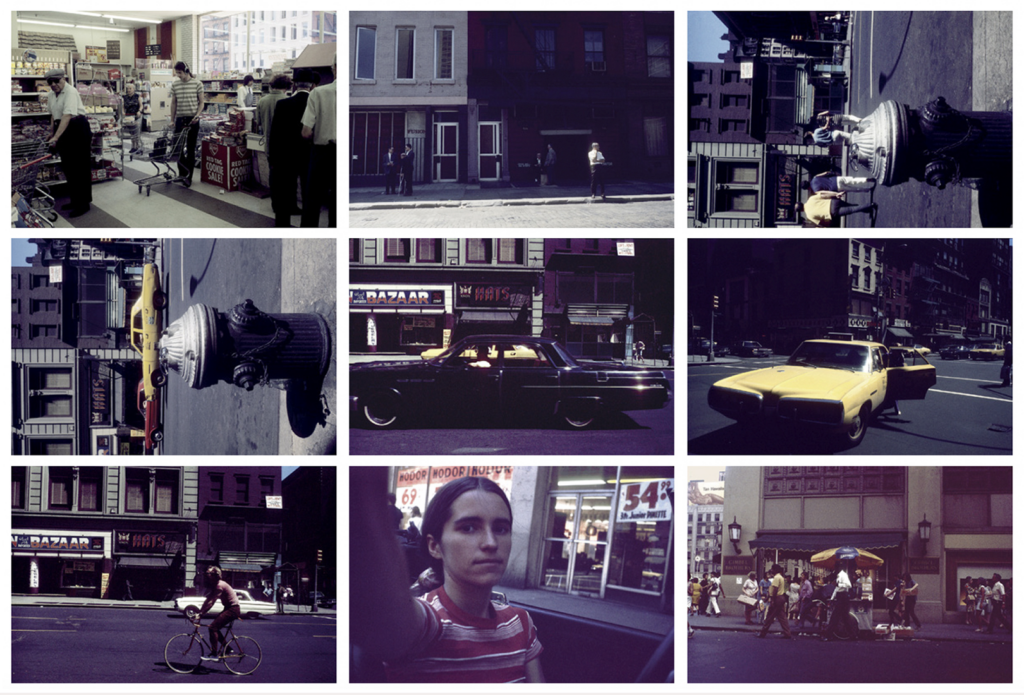
Figure 2: From July 3 in Memory by Bernadette Mayer, Siglio, 2020. Courtesy Bernadette Mayer Papers, Special Collections & Archives, University of California, San Diego.
Rather than complete the written record, the photographs overwrite it with details that merely persist.39 As Mayer writes in the July 25th entry: "I write all this stuff down I know it comes out of nowhere goes nowhere & remains, nothing leaves" (256). And in a 1989 exercise that returns to this entry, she asks, "Is detail in any form the same expression," suggesting that the preservation of details in their difference, their unrecognizability, usurps the meaning or expression of a work of art.40 She also later claimed she was trying to take photographs of "what you're really seeing, not trying to isolate objects and put them in the center of the frame."41 This decentering approach, informed by street photography, speaks to a desire to capture "real" perception even as the photographs she takes displace the experience and memory of a scene. As I will explore, Memory's photographs are awash in details that were unseen when they appeared. In other words, they do not recover original experience but represent their own visual record that does not properly belong to Mayer, even as she reincorporates details from the photos into the text of Memory.
The photographs are material fragments of Mayer's observable world and speak to what she was interested in, but in many cases they seem to take over phenomenal perception altogether. Rather than see something and then record it photographically, she records in writing what the photos capture as though it were experience itself. Memory is an experiment in how the possibilities of photographic recording shape perception, just as the Language writers explored how "language's materiality shaped meaning."42 In the July 4th entry for example, Mayer writes: "Ed was still asleep when I got up. I washed at least 3 blue shirts to take to massachusetts & overexposed them on the fire escape. Tom said the underexposed ones look like a casket" (52). In this passage, the shirts are not hung to dry before they are photographs. The exposure is off, but one can tell from the photos that all three are clearly in direct sun on the rooftop railing.
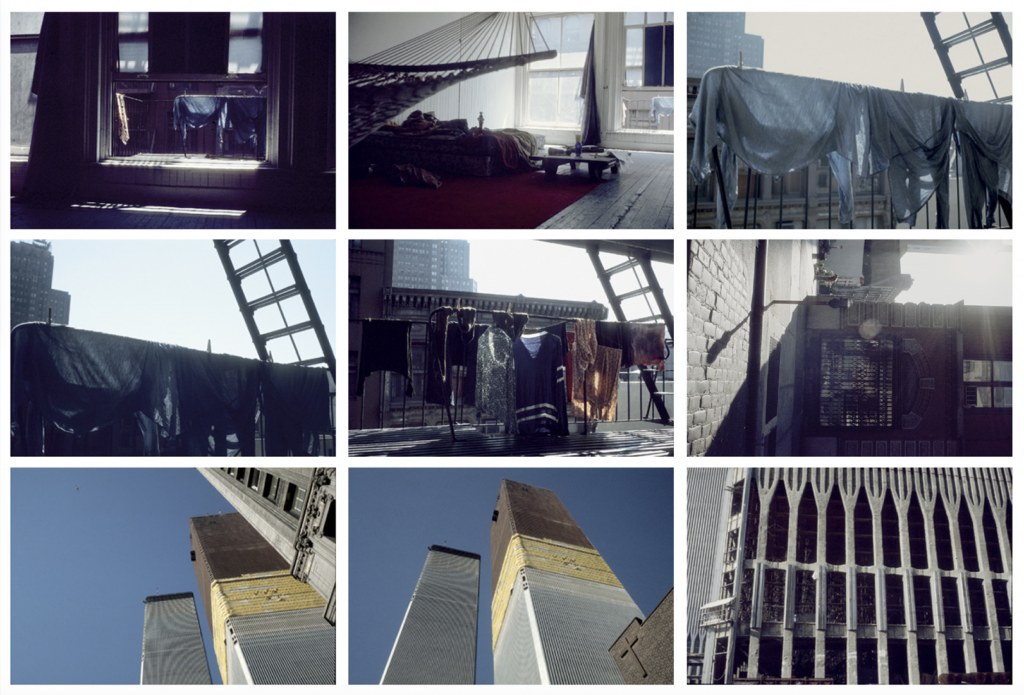
Figure 3: From July 4 in Memory by Bernadette Mayer, Siglio, 2020. Courtesy Bernadette Mayer Papers, Special Collections & Archives, University of California, San Diego.
That is, over- and underexposure are not metaphors for being in and out of the sun, but allusions to the photographs themselves, which precede the action they depict. Drying the shirts and looking at the photos with Tom — events that take place at least weeks apart — bleed together in a fantasy of total immediacy. The writing seems to record life directly from memory, but the word choice ("overexposed") highlights how photographs intervene to overwrite experience. Throughout Memory, descriptions of activities or winding thoughts are interrupted by details from the photographs: yellow cabs or passersby that would naturally slip out of memory are frozen in images and listed on the page. The photographs in many cases determine what appears to be "seen" in the recorded text.
Elsewhere, Mayer writes about the record not as a mechanized afterword to perception, but an automatic system of sorting and noticing that is built into phenomenal perception itself. In a section of the July 5th entry, Mayer and friends play with optical illusions: staring at one color for so long that when you turn to a white page, you see its opposite, for example: "The retina —which lies at the back of the eyeball, the eye, like windows, like cameras, like image in sound" can be overstimulated so that it no longer sees a certain color (67). The eye itself is a machine that acts based on prior experience, or memory. In this sense, the camera does not denote greater objectivity but the impossibility of an external point from which one could accurately see and record oneself. Rather, Mayer's audiovisual experiment uses self-documentation to muddle self-recognition by interposing archival apparatuses between perception and memory, and so reckoning with the layers of automation embedded within perception itself.
Mayer plays with tropes of immediacy by using voice recording and the diary form, but she ultimately does not revive past experience; instead, she draws from documents that index what was not perceived at the time. She writes in the July 22 entry of viewing some undeveloped film, for instance, "I can read off details in it which were unnoticed while my eyes were open" (234). Walter Benjamin called this the optical unconscious: what is imperceptible in the moment is revealed by photography.43 He writes that photography uncovers the "material physiognomic aspects of pictorial words which live in the smallest things, perceptible yet covert enough to find shelter in daydreams, but which, once enlarged and capable of formulation, show the difference between technology and magic to be entirely a matter of historical variables."44 Photography seems to invent what already exists as something unseen — something too minute or ephemeral to be perceived even as it is known on some level — by bringing it to light and holding it enframed. In this sense, photography performs a crystallization of "pictorial words" into clear, eerily accurate images by which the imagined notion is supplanted by the real detail. As Barthes reminds us, though the photograph is "mingled with our noisiest everyday life," it maintains "an enigmatic point of inactuality."45 "Not only is the Photograph never, in essence, a memory," he goes on, "but it actually blocks memory, quickly becomes a counter-memory."46
The camera is not an externalization of human memory in machine form. This is what Bernes claims when he draws an analogy between Memory's surplus of data and formal excess, on the one hand, and the frenetic blurring of office work and housework in 1970s capitalism, on the other.47 Bernes writes that recording technology "represents less something absolutely external to the self than something that was once part of the self but now has become externalized — a memory that, once part of the neural circuitry, has become writing, photographs, audiotape."48 He goes on to argue that "Memory, in this light, depicts the laboring body struggling against its own transformation into and subsumption by the machine, struggling against its own becoming-machine."49 But photographic counter-memory never posits that photography externalizes memory; rather, it is an entirely new way of seeing what was never available to the human eye.50 Moreover, there is something nostalgic in Bernes's account of lost connection to unmediated consciousness of the present moment. He writes that while there is a wealth of data in Memory, it "discloses a strange synthesis of poverty and wealth."51 This poverty is of a consciousness overrun by the labor of recording the past for its future, shrinking the present moment. What Bernes calls the "tyranny of remembrance" echoes William Wordsworth's "tyranny of the eye," a distraction from immersion in more philosophical conscious thought.52 If we could experience life without mediation, Bernes seems to suggest, we would be less alienated.53 But Mayer is more playful with her use of counter-memory than Bernes's account would allow. She actually uses the optical unconscious to explore how consciousness is always mediated by various unknowns and unseens, not to lament the supposed loss of unmediated experience that technology represents.
In Memory, her serial photo-poetics maintains a sense of inexhaustibility, using photographic data to itemize the unseen, articulating its own negative capability. In his 1840 essay, "The Daguerreotype," Edgar Allan Poe wrote that "the daguerreotyped plate is infinitely (we use this term advisedly) infinitely more accurate in its representation than any painting by human hands."54 Such an emphasis on the infinitude of the daguerreotype's accuracy suggests it is unmatchable by human efforts, indeed, that it is an inhuman medium, something altogether apart and alienated from "human hands." Mayer embeds this inhuman infinitude into Memory as self-difference or estrangement, within a framework of what appears to be utter visibility. By integrating photographic counter-memory into self-documentation, Mayer does not revive past consciousness but destabilizes a sense of the self held together by a linear progression of conscious states. In an extended experiment of self-documentation that investigates the workings of memory, Mayer does not reveal her interiority or narrate the meaning of her experiences. Memory is a poetic text without subjectivity. Instead, it exposes a relation to the self as that which is exterior and estranging through its use of photographic counter-memory. The photographs she takes to aid her project displace the immediacy and presence that might seem to define her constraint-based approach with the alterity of the unseen.
I will close with a brief examination of Midwinter Day to suggest, finally, that Mayer's use of the photograph as counter-memory introduces a specifically poetic opacity into her auto-documentary works. Published in 1982 and perhaps her most popular work, Midwinter Day is a book-length poem in six parts that was ostensibly written in one day: December 22, 1978. It represents Mayer's best attempt to record her experiences and thoughts as they occurred. It is an account both of ordinary domestic tasks in Lenox, Massachusetts with her husband and two young children, and a record of her dreams and associative, wandering interiority. Of her virtuosic writing process Mayer states, "Nobody ever believes me when I tell them that it was written in one day, but it almost was."55 This "almost" is crucial. As White writes:
Mayer's stated aim to make a document of lived experience clearly crosses with fantasies about spontaneous expression with which she had been experimenting since Memory ... yet the deformation of experience by writing is Midwinter Day's problem/project: it attempts to capture the dailiness of life without destroying its dailiness by abstracting and reshaping it overmuch, and it theorizes the failure.56
By straining toward a perfect record of experience, Mayer theorizes poetry's drive to immediacy and its necessary "deformation." She rehearsed dream writing for two weeks in preparation for Midwinter Day, kept copies of the day's newspaper and other written material, and took photographs to write about and incorporate later.
In fact, she exposed one roll of film, taking the same number of photos as she did each day during the month-long Memory project, and she made written descriptions of the images before selectively folding that text into the poem.57 These photos shadow the text without ever appearing in it. Mayer writes of the photos: "In this instance and also the use of the photographs in Memory ... I was never trying to take beautiful photographs necessarily. I was always trying to take as many as possible; ... The other thing is that you don't always see all these things when you're looking with your eyes. It became more information."58 She goes on to note examples of the optical unconscious, of visual data that supersede anything she could transcribe in real time. Mayer records her daily life as though it didn't belong to her. As she puts it, "it would be interesting to write about what you know and leave out the self;" that is, to approach the self anonymously.59 Once again, Mayer uses photography as an ostensibly objective record of reality but also as a blind point of inaccessibility or difference within the self, a record of what one does not see that is then folded into the remembered day.
In her 1989 lecture at the Naropa Institute, she offers a couple of examples of these descriptions for Midwinter Day, drawn from photographs: "1. Trying to see myself in the mirror over the typewriter as sea. 2. Breakfast at the bottle of milk, white light. Lewis in shirt jacket. Marie stripes putting oatmeal in mouth."60 Direct engagement with the photographic images seems to infuse an account of perceptual experience with poetic language: simile, paratactic sentence fragments, and a synesthetic overlay of taste and sight arise out of Mayer's automatic approach to recording photographic data. She does not simply use the photos to prompt memory — that breakfast consisted of milk and oatmeal, that Marie was in stripes and Lewis in a shirt jacket — but rather to stimulate a connotative and figurative approach to documentation. It is unlikely that Mayer perceived her mirror as a sea when she was photographing herself looking into it, or registered the bottle of milk as white light, but more likely that these figurative ways of seeing were fostered through exposing film to the moment and retroactively annotating it. Rather than understanding her use of photography as an aid to memory, then, what I have been suggesting is that Mayer uses photos as data of the optical unconscious to experiment with poetry as another medium that occludes as it records. She engages with the documenting material itself, which is used to invent immediacy while paradoxically exposing a void or absence as the substrate of the poem.
Midwinter Day figures the impossible "everything work" as akin to a dream. In the fifth section of the book, when Mayer is finally at her writing desk after a day of parenting, running errands, cooking and doing dishes, she writes:
I had an idea to write a book that would translate the detail of thought from a day to language like a dream transformed to read as it does, everything, a book that would end before it started in time to prove the day like the dream has everything in it, to do this without remembering like a dream inciting writing continuously for as long as you can stand up till you fall down like in a story to show and possess everything we know because having it all at once is performing a magical service for survival by the use of the mind like memory.61
If we take this passage as a key to understanding Midwinter Day, its dreamlike hypothesis is of the constant, ongoing linguistic record that safeguards one from annihilation, or at least wards it off for as long as possible. But, as she puts it in the same section, the iterative work of memory is the risk of self-difference: "Sometimes the story changes in remembering like the threat of extinction, shrinking forests, quarks, quasars, and black holes, dirty snowballs and antirocks in space."62 The alterity within memory itself is figured in terms of both natural destruction and quantum physics, gesturing to a kind of larger-than-life ineffability that stretches the coherence of the self out into the material world.
In a work largely understood in terms of the poet's subjective experience of the minute, quotidian, and feminized labor of parenting and quiet living, Mayer insists on total optic relevancy: "Everywhere there is has everything there is to look at."63 But the attempt to record "everything" necessarily results in various "black holes." Coolidge put it well: "the certainties of didactic discourse are hurled into the erosion of the poetic principle. Poetry being forever lost must submit to its own vacuity; it is somehow a product of exhaustion rather than creation. Poetry is always a dying language but never a dead language."64 By coupling the written record of her day with the alterity of the photograph, Mayer opens up this anonymous underside of the self in poetic form as that which withdraws from sense. In her experiments with constant, impersonal documentation, Mayer uses photography to capture the unseen, which is then folded into her poetry as the unknowable, as self-difference that strains to be a "perfect" record. This double movement is what Édouard Glissant calls poetic force: "the opacity of the diverse animating the imagined transparency of Relation."65 Mayer's photo-poetic method does not safeguard or articulate her self; instead, the "imagined transparency" of the photograph further obscures and anonymizes the self. She suggests, ultimately, that poetic language works against the modern obsession with self-expression, self-knowledge, and self-recording; it is a last refuge of the inarticulable and contradictory, or "the thought that has nowhere else to sleep."66
Claire Grandy researches poetry, photography, and romanticism. Her writing has appeared in European Romantic Review, Contemporary Literature, Criticism, differences: A Journal of Feminist Cultural Studies, and the edited collection, Screens and Illusionism: Alternative Teleologies of Mediation. She is an assistant professor of English at Baruch College, CUNY.
Banner Image courtesy of CANADA Gallery.
I would like to thank the editors and readers for Post45, who helped me to revise this article. I would also like to thank Lisa Pearson at Siglio Press and CANADA gallery for granting permission to reprint images from Memory.
References
- Marcel Proust, In Search of Lost Time, Volume 3: The Guermantes Way, trans. Scott Moncrieff (Yale University Press, 2018), 149.[⤒]
- Siegfried Kracauer, The Mass Ornament: Weimar Essays (Harvard University Press, 1995 [1927]), 50.[⤒]
- Kracauer, The Mass Ornament, 51.[⤒]
- Barthes writes that photography's violence lies in its capacity to supplant memory and ideation with "nothing but the exorbitant thing." Excess is built into the very thingness of the photographic image. "It fills the sight by force," he goes on, "because in it nothing can be refused or transformed." Camera Lucida: Reflections on Photography (Farrar, Straus and Giroux, 2010 [1981]), 91.[⤒]
- The recuperation of stray details into a unified aesthetic object is a project of lyric reading, as Virginia Jackson argues in reference to the critical reception and publication history of Emily Dickinson's fascicles. She defines lyric reading as "associations between literal accident and figurative meaning" that invite surmise, whereby fragments, detritus, and details are read as though they had significance by virtue of poetic intention/attention. Dickinson's Misery: A Theory of Lyric Reading (Princeton University Press, 2005), 67.[⤒]
- Maggie Nelson, Women, The New York School, and Other True Abstractions (University of Iowa Press, 2007), 100.[⤒]
- Kristin Grogan and David Hobbs, "Introduction," in Bernadette Mayer, Post45, July 2021.[⤒]
- As Andrew Epstein notes, Memory takes part in a broader trend of "everyday-life aesthetics" that includes works like James Schuyler's "Hymn to Life," Robert Creeley's A Day Book, Ron Silliman's Ketjak, John Ashbery's The Vermont Notebook, and Lyn Hejinian's My Life, all of which were written in the 1970s. Attention Equals Life: The Pursuit of the Everyday in Contemporary Poetry and Culture (Oxford University Press, 2016), 37.[⤒]
- The publication is made from scans of the original slides. It is not a perfect recreation though, as some slides were lost over the years, and others were able to be produced that were too over- or under-exposed to be properly developed in 1972.[⤒]
- Mayer's work was featured in Anne Waldman and Andrew Schelling's collection Disembodied Poetics: Annals of the Jack Kerouac School (University of New Mexico Press, 1994) and Lucy Lippard's Six Years: The Dematerialization of the Art Object from 1966 to 1972 (University of California Press, 1997).[⤒]
- Peter Baker, "Bernadette Mayer," in Dictionary of Literary Biography 165: American Poets Since World War II (Fourth Series), ed. Joseph M. Conte (Gale Research Press, 1996), 167.[⤒]
- As Louisa Lee writes, "reading this text over a number of days became an exercise in endurance and the re-reading of passages of the text is a necessity." "Memory, Bernadette Mayer [2020] Review," Philosophy of Photography 10, no. 2 (2019): 295. And as Lisa Pearson, founder and publisher of Siglio, put it, "I had read Memory, but not well — even now, after reading it multiple times to edit, proof, typeset, after hearing it read every day during the Poets House series this summer, it is always a new text to me." Gillian White, "The Making of Memory: An Interview with Lisa Pearson of Siglio Press," Post45, 2021.[⤒]
- Nelson, Women, 104. Baker, "Bernadette Mayer," 167.[⤒]
- Lisa Pearson explains that she designed the book in conversation with Mayer, and with the experience of the original installation in mind: "I was attempting to translate (some of) that experience into the book: an attention to navigating the expanse sequentially (walking the length of the wall), to savoring the close-ups of single images (stepping in to look closely), to seeing text and image correlate sometimes while often times diverging, to hearing the spoken text while looking at the images." White, "The Making of Memory."[⤒]
- Johnson quotes from Charles Patterson's interpretation of Keats's "Ode on a Grecian Urn": "the urn is a receptacle, just as is the body of woman — the receptacle from which life springs" (qtd. 202). Barbara Johnson, "Muteness Envy," in The Barbara Johnson Reader: The Surprise of Otherness (Duke University Press, 2014), 200-216.[⤒]
- Midwinter Day especially uses lyric tropes of second person address and song: "And forgetting but for you / To whom I turn to sing" (21).[⤒]
- Anne Carson, "The Gender of Sound," in Glass, Irony & God (New Directions, 1995), 129.[⤒]
- Carson, "The Gender of Sound," 129.[⤒]
- Amy De'Ath, "Manly Things," Post45, 2021.[⤒]
- Jurgenson defines "social photography" as a cultural practice, part of a broader development in self-expression, memory, and sociality that expresses itself in the ephemeral and communicative activity of sharing images online. He writes that "the rise of social photography is an even deeper and more intimate saturation of the image into how we see, speak, and think ... with more of our everyday moments understood to be pregnant with photographic potential" The Social Photo: On Photography and Social Media (Verso, 2019), 11-12.[⤒]
- Ann Vickery, Leaving Lines of Gender: A Feminist Genealogy of Language Writing, (Wesleyan University Press, 2000), 152. Mayer's later works, like Midwinter Day, would also adopt temporal or spatial constraints. The Helens of Troy, N.Y (2013), for instance, tracks down every woman named Helen living in Troy, New York to photograph them and write poems about them. The playfulness of her exercises and constraints belong to their own tradition, perhaps best exemplified by the contemporary (Soma)tic poetry exercises of CA Conrad.[⤒]
- Epstein, Attention Equals Life, 166.[⤒]
- Bernadette Mayer, Memory (Siglio Press, 2020), 121. Hereafter cited parenthetically in the text.[⤒]
- Nelson, Women, 103.[⤒]
- Matthew Kilbane, "Sounding Memory," Post45, 2021. Whereas Kilbane argues that Mayer's process of writing Memory by revisiting photographs, tapes, and diaries performs "the recursive layered, leaping arcs of a recollecting consciousness," in a strange revamping of William Wordsworth's definition of poetry as "emotion recollected in tranquility," I suggest that Mayer's "double exposure" does not evoke the conscious mind but the optical unconscious. In fact, Kilbane alludes to this line from Wordsworth when he writes that a passage about double-exposed images is "an overlaying of September's recollected tranquility upon July's spontaneous photography." In flipping the order of the terms, Kilbane makes the photograph the feeling and the conversation about it the poem. In the place of feeling is an overflow of images.[⤒]
- As Jasper Bernes writes, Memory fails to record consciousness as such because "it is by necessity a description of itself, a memory [not of life, but] of Memory, and the early stages of the project." Jasper Bernes, "The Feminization of Speedup," in The Work of Art in the Age of Deindustrialization (Stanford University Press, 2017), 124.[⤒]
- Lisa Jarnot, "An Interview with Bernadette Mayer," St. Marks Poetry Project Newsletter (1998), 9.[⤒]
- Bernadette Mayer, Midwinter Day (New Directions, 1982), 102.[⤒]
- Baker, "Bernadette Mayer," American Poets Since World War II.[⤒]
- Examples of these experimental works include Andy Warhol's Sleep (1963), John Ashbery's "Litany" (1979), and Lyn Hejinian's My Life (1980).[⤒]
- Ann Vickery points out that although she was a leading experimental poet on the East Coast, teaching many prominent Language writers and running St. Mark's Poetry Project for four years, Mayer was overlooked by Perelman and Davidson's critical overviews of conceptual poetry and didn't receive much critical attention until the 1990s (150). Vickery also notes that certain critics thought "Mayer's focus on the domestic gave her poetry a lack of political orientation." Leaving Lines of Gender: A Feminist Genealogy of Language Writing (Wesleyan University Press, 2000), 159. And Gillian White addresses the "shame" Mayer felt as a "failed experimentalist" because she wrote in an autobiographical register about her domestic life. Lyric Shame: The "Lyric" Subject of Contemporary American Poetry (Harvard University Press, 2014), 173.[⤒]
- Bernadette Mayer, "Bernadette Mayer's Writing Experiments," EPC Digital Library.[⤒]
- Daniel Kane, "Bernadette Mayer and 'Language' in the Poetry Project," in All Poets Welcome: The Lower East Side Poetry Scene in the 1960s (University of California Press, 2003), 201.[⤒]
- Kane writes that Mayer "maintained a connection to writing as expressivist, microsocial, and personal" (193), and Vickery calls Memory a project of "externalizing the emotional." Kane, "Bernadette Mayer," 153.[⤒]
- White, Lyric Shame, 204.[⤒]
- As Lee writes, "Memory can be read as an important resource in the Marxist feminist project to critically challenge and undo the false dichotomies between work and life, the home and the workplace, the personal and political, memory and history." "Memory, Bernadette Mayer [2020] Review," 296. As Nelson argues, this undoing is accomplished in part through formal excess, "of writing too much, of wanting too much, of transgressing the proprieties of economic, literary, and/or sexual structures we've infused with a particular morality." Women, 127.[⤒]
- As Jacques Derrida writes of the archive in Archive Fever (The University of Chicago Press, 1996): "one will never be able to objectivize it with no remainder. The archivist produces more archive, and that is why the archive is never closed. It opens out of the future" (68).[⤒]
- Amy De'Ath, "Manly Things."[⤒]
- Lindsay Garbutt writes in her review of the 2020 edition, "the combination of text and images allows for a fuller record of each day. Together, they convey the collaborative, communal world Mayer worked within." Lindsay Garbutt, "Everyday Life, Revisited — with Bernadette Mayer's Memory," JSTOR Daily, April 15, 2020. Garbutt suggests that the text adds movement and duration to otherwise static images, creating a complementary relation between them. But such an estimation of the fuller or more complete record, as I have been suggesting, is itself a fantasy of containment, premised upon the ideal that the record could be complete.[⤒]
- Bernadette Mayer, "Bring it Here," Columbia: A Journal of Literature and Art, no. 14 (1989): 108.[⤒]
- Bernadette Mayer, "From: A Lecture at the Naropa Institute, 1989," in Disembodied Poetics: Annals of the Jack Kerouac School, ed. Anne Waldman and Andrew Schelling (University of New Mexico Press, 1994), 101.[⤒]
- Vickery, Leaving Lines of Gender, 157.[⤒]
- Jean-Christophe Bailly defines the optical unconscious as "the unknown share that every photograph conceals from the very person taking it" in The Instant and its Shadow: A Story of Photography, trans. Samuel E. Martin (Fordham University Press, 2020), 47.[⤒]
- Walter Benjamin, "A Short History of Photography," Screen 13, no. 1 (1972): 7-8.[⤒]
- Roland Barthes, Camera Lucida: Reflections on Photography, trans. Richard Howard (Farrar, Straus and Giroux, 2010), 91.[⤒]
- Barthes, Camera Lucida, 91.[⤒]
- Bernes, "The Feminization of Speedup," 146.[⤒]
- Bernes, "The Feminization of Speedup," 138.[⤒]
- Bernes, "The Feminization of Speedup," 139.[⤒]
- Eadward Muybridge's nineteenth-century photographic experiments provide one example of this. Asked to settle a bet regarding whether a galloping horse lifts all four legs off the ground, Muybridge set up a series of cameras along a racetrack to take photos triggered by the horse's movement. He captured in still images what was indiscernible as blur to the naked eye. He ended up disproving the notion, represented in paintings, of the "flying gallop," where the legs are all raised and extended in a graceful jeté, showing that when the legs are all lifted, they are actually tucked in under the horse's body. This is an example of counter-memory, where a photographic image replaces what the eye thinks it sees with what the camera sees. After news of his experiment spread, painters stopped depicting the flying gallop. Kris Belden-Adams, "Eadweard Muybridge, The Horse in Motion," in Smarthistory, June 6, 2021.[⤒]
- Bernes, "The Feminization of Speedup," 148.[⤒]
- Bernes, "The Feminization of Speedup," 142.[⤒]
- See Anna Kornbluh's Immediacy: Or, the Style of Too Late Capitalism (Verso, 2024), for an account of how immediacy and instantaneity become stand-ins for anti-capitalist revolution (187-88).[⤒]
- Edgar Allan Poe, "The Daguerreotype," in Classic Essays on Photography, ed. Alan Trachtenberg (Leete's Island Books, 1980), 37-38.[⤒]
- Mayer, "Lecture," 100.[⤒]
- White, Lyric Shame, 182.[⤒]
- Mayer, "Lecture," 101.[⤒]
- Mayer, "Lecture," 101.[⤒]
- Mayer, "Lecture," 101. In the same lecture, she laments the resistance many poets have to collaboration: "It's amazing to see how frightened people are of sharing their anonymity" (101).[⤒]
- Mayer, "Lecture," 101.[⤒]
- Mayer, Midwinter Day, 89.[⤒]
- Mayer, Midwinter Day, 89.[⤒]
- Mayer, Midwinter Day, 107.[⤒]
- Lytle Shaw, Fieldworks: From Place to Site in Postwar Poetics (The University of Alabama Press, 2012), 164.[⤒]
- Édouard Glissant, Poetics of Relation, trans. Betsy Wing (University of Michigan Press, 1997), 192.[⤒]
- Anne Waldman and Andrew Schelling, "Introduction," in Disembodied Poetics: Annals of the Jack Kerouac School (University of New Mexico Press, 1994), xiii.[⤒]
Related reading
 The Slow Burn: My Struggle
 Manifest Diversity and the Empire of Finance
Susan Sontag and the Americanization of the Nouveau Roman
Manifest Diversity and the Empire of Finance
Susan Sontag and the Americanization of the Nouveau Roman
 The Programming Era: The Art of Conversation Design from ELIZA to Alexa
“The Trouble Spot”: Racialized Paranoia and the Vision of the State in The Spook Who Sat by the Door
Cartoon Viscera
The Programming Era: The Art of Conversation Design from ELIZA to Alexa
“The Trouble Spot”: Racialized Paranoia and the Vision of the State in The Spook Who Sat by the Door
Cartoon Viscera
 Toward a Trans Fag Phenomenology: the Orientation(s) of Desire and the Afterlives of Lou Sullivan
 Big Color Analytics: Privatization, Precarity, Pantone
Seeing Past Consumption: Race and Species in the Slaughterhouse
The Blues Brothers, Tammy Wynette, and the Long Denouement of the 1960s
Big Color Analytics: Privatization, Precarity, Pantone
Seeing Past Consumption: Race and Species in the Slaughterhouse
The Blues Brothers, Tammy Wynette, and the Long Denouement of the 1960s
 Side Hustle: College Sports and the Future of Academic Labor
Toward a Poetics of the Detainee
The Thinking Novel: Theme-and-Variations Form in the Contemporary Novel of Ideas
Side Hustle: College Sports and the Future of Academic Labor
Toward a Poetics of the Detainee
The Thinking Novel: Theme-and-Variations Form in the Contemporary Novel of Ideas