In "Stranger in the Village," the final essay of his 1955 collection Notes of a Native Son, James Baldwin reflects on the predicament of feeling estranged from the intellectual traditions of the cultural milieu with which one claims affiliation. Originally published in 1953, "Stranger" describes Baldwin's experiences as a Black expatriate writer living in Leukerbad, Switzerland in the early fifties. Throughout the essay, Baldwin weighs Leukerbad's social insularity against the extreme dissociation he feels walking amongst the villagers in an effort to think beyond the most conspicuous difference of skin color. Despite an initial, sardonic nod to his own naiveite — "From all available evidence no black man had ever set foot in this tiny Swiss village before I came" — Baldwin works to reckon with the fact that though "everyone in the village knows my name ... I remain as much a stranger today as I was the first day I arrived, and the children shout Neger! Neger! as I walk along the streets."1 Neither affiliation nor context ease Baldwin's sense of alienation in Leukerbad. Indeed, even as he acknowledges the benign nature of the villagers' belligerence — "there was certainly no element of intentional unkindness" — Baldwin also points to a more pernicious kind of differentiation at play — "there was yet no suggestion that I was human: I was simply a living wonder."2 The stranger's place in the village marks an interval in Baldwin's view, between the familiar human condition and the radical alterity of the unknown. As the villagers' quotidian assaults on Baldwin's autonomy and dignity suggest, the stranger must reckon daily with a more fundamental social dissonance than mere anonymity.
For Baldwin, the stranger stands not only out of place but out of time, at an existential remove from the traditions of modernity that have historically determined humanistic inquiry and artistic expression. As for Leukerbad, Baldwin maintains that despite the village's remote location, intimate size, and ethnic homogeneity, its popularity as a tourist destination belies its ties to the wider world. Rather than seeing the villagers as strangers amidst a larger European, or even global community, Baldwin insists on positioning himself as the interloper in their midst:
For this village, even were it incomparably more remote and incredibly more primitive, is the West, the West onto which I have been so strangely grafted. These people cannot be, from the point of view of power, strangers anywhere in the world; they have made the modern world, in effect, even if they do not know it. The most illiterate among them is related, in a way that I am not, to Dante, Shakespeare, Michelangelo, Aeschylus, Da Vinci, Rembrandt, and Racine; the cathedral at Chartres says something to them which it cannot say to me, as indeed would New York's Empire State building, should anyone here ever see it.3
As a stranger, Baldwin can ostensibly only look on as a passive bystander while the activity of cultural production unfolds before him. To participate in the world's aesthetic development — to belong and to be recognized —Baldwin suggests, necessarily involves forms of exchange and relation that generations of colonialization have long denied. By casting the stranger's plight as a form of excommunication, Baldwin insists on the hermeneutic consequences of alienation. In Baldwin's sober estimation, as "people are trapped in history and history is trapped in them," both the stranger and the villagers, however worldly or provincial, remain stuck at an unnavigable impasse.4
Decades after Baldwin's sojourn, his essay's apparent fatalism leads Teju Cole to revisit and reconsider the Black stranger's plight in the contemporary village of the West. Originally published in The New Yorker in 2014 and then again in his 2016 collection Known and Strange Things, Cole's essay "Black Body" responds to "Stranger" by literally retracing Baldwin's steps through Switzerland. Cole arrives at a "body-double moment" — his realization of the existential concerns he and Baldwin share — while reading his predecessor's words and listening to Bessie Smith's voice in a bath in Leukerbad. "I am black like him," Cole muses, "the custodian of a black body, and have to find the language for all of what that means to me and to the people who look at me."5 In this way, Cole avers Baldwin's suggestion that the stranger's efforts to articulate their racialized experience constitute a peculiarly hermeneutic challenge, and he underscores the uniquely visual aspect of this estrangement. "To be a stranger is to be looked at," Cole writes, "but to be black is to be looked at especially."6 Nevertheless, despite the overlaps in their thinking, Cole deviates from Baldwin's historical vision to project his own, more optimistic view of the stranger's place in the world. "If, back then, [Leukerbad] had a pious and convalescent air about it," Cole suggests, "it is much busier now, packed with visitors from other parts of Switzerland, and ... all over Europe, Asia, and the Americas."7 For Cole, Switzerland's diversification since Baldwin's visits align with historical shifts that have shaped his own subject formation as a world traveler. As a Black traveler in the twenty-first century, Cole distances himself from Baldwin's condemnation of modernity, choosing instead to adopt a more nuanced postcolonial disposition. "I am not an interloper when I look at a Rembrandt portrait," Cole insists — "I can oppose white supremacy and still rejoice in Gothic architecture."8 Despite the challenges of navigating a world of globalized encounter and exchange as a Black cosmopolitan subject, Cole maintains that we have all become strangers unto one another.
Cole's ambivalence toward Baldwin's theory of alienation reverberates throughout his recent explorations of the form and genre of the photobook. The title of his first photobook, Blind Spot — named after an episode of papillophlebitis in 2005, in which Cole temporarily lost sight in one eye — carries multiple connotations. Reflecting on his condition, Cole has posited that the loss of sight "ushers in an experiential parenthesis, into which something else might be made manifest. There is a way infirmity can force us into a kind of humility."9 As a metaphor for the horizons of our ethical and epistemological commitments, Cole suggests, the blind spot incites reconsideration. Elsewhere, Cole has also associated blind spots with "the buried histories that we disregard [and] the idea, that, again, something can bloom out of that, that can expand your awareness... of the lived moment."10 Indeed, the same revelatory potential Cole sees in blind spots recalls Baldwin's abiding affinity for Leukerbad as a site of recuperation, despite its alienating context. "There is often something beautiful, always something awful," Baldwin surmised, reflecting on Leukerbad's reputation as a spa town, "in the spectacle of a person who has lost one of his faculties, a faculty he never questioned until it was gone, and who struggles to recover it."11 Though Leukerbad itself does not appear in Blind Spot, Cole's reverence for Switzerland as a mecca of sorts — as a heuristic through which his understanding of alienation, identity, photography, and time might be revisited, reconsidered, and more clearly understood — would seem to corroborate Baldwin's claim.
This essay takes Cole's interest in Baldwin as a world traveler as its occasion for studying Cole's own creative itineracy, attending particularly to the function of photography in his diverse body of work. Though his fiction has enjoyed ample critical engagement, the four photobooks Cole has published to date remain largely unconsidered by literary scholars, marking a notable gap in our understanding of his larger cultural project.12 As I demonstrate here, reading Cole's photobooks illuminates a coherent if diverse set of aesthetic provocations pertaining to textual and visual co-mediation that challenge presumptions about his work itself and the wider genre of the photobook more broadly. For Cole, I argue, the photobook's idiosyncratic form makes manifest just such a means of articulation by facilitating the simultaneous synthesis and estrangement of textual and visual media from one another. With each of his projects, Cole brings words and images together in ways that highlight and interrogate their ostensible correspondence, reformulating our sense of what it means for one medium to capture another. Before exploring his photobooks individually, I briefly examine how Cole's recent works depart both from his own text-based fiction and from a tradition of Black visual texts focused on reifying racial identity and experience. Ultimately, I find that through this visual turn in his career, Cole has inverted Baldwin's thesis on conspicuity and estrangement into a series of meditations on what it means to recognize others and to revise our own faculties of attention.
Though Cole has long centered the themes of alienation and opacity he sees in Baldwin's thinking in his own fiction, his engagement with these ideas in his early photobooks comprise a yet understudied development in his career. As world travelers like himself, Cole's protagonists reflect extensively on their shifting relationships with others and the social milieu around them. Julius, the protagonist of Cole's 2011 novel Open City, walks aimlessly through the streets of New York and Brussels to decompress from the stress of his work as a psychiatry resident. The eclectic procession of interlocutors and lieux de memoires Julius encounters on his walks at once advances Open City's narrative, and also projects a kaleidoscopic cosmopolitanism that Emily Johansen has called a "model for thinking through the individual's material and embodied participation in larger communities, both above and beyond the nation-state."13 That Julius struggles to empathize with or, indeed, even to remember the people he meets demonstrates how Cole qualifies cosmopolitanism in the novel, by undercutting Julius's ability to connect with others through intellectual exchange alone. Julius's dissociation from his social world is contrasted with his meditations on the layers of history underlying the built environment around him. The formal juxtaposition of Julius's hyper-referential narration and his persistent sense of dislocation has led Pieter Vermeulen to describe Open City as a "catalogue of failed attempts ... [at] polyphonic form. Instead of a cosmopolitan connectedness," Vermeulen argues, "the novel's main figures of transport — walking, memory, art — at best provide experiences of shared isolation."14
Open City's critique of cosmopolitanism is inverted in Cole's 2007 novella Every Day is for the Thief, in which the unnamed protagonist's introspection is inspired by his return home to Lagos, Nigeria for the first time in fifteen years. Reckoning with his extended time away, this earlier protagonist's city walks are as much about seeking out old haunts and new interests as they are reminders of his estrangement from his birth country. Unlike Julius, to whom New York seems an open and immediately legible book, Cole's protagonist in Every Day struggles to articulate an organizing logic underlying the arbitrary scenes of violence and chance encounters that shape his homecoming. In addition to the impressionistic vignettes through which the narrator relates his experience, the opacity of daily life in Lagos is also evoked by the allusive, uncaptioned images Cole disperses throughout the text. The protagonist's interest in photography notwithstanding, these pictures are neither acknowledged in the narrative nor directly correlated to its events. Instead, by "disconnecting the photos from their ... ekphrastic references," Cole invites what Gabriele Rippl has described as "centrifugal interpretations" of the intermedial exchanges in his novella.15 As I demonstrate below, the same antinomies that characterize Cole's fiction, animating tensions between community and individuation, connection and isolation, and confusion and transparency, also structure his photobooks. Cole returns to these contradictions in each of his visual projects, restaging the formal interaction of language and photography in new ways that resist conceptual resolution and embrace indeterminacy. By reiterating the open-ended question of how images and words mutually reshape aesthetic experience, Cole's photobooks offer new vantages onto his own literary oeuvre and the wider photobook genre as well.
Of course, Cole is far from the first Black writer either to work across media, or to experiment with the photobook specifically: authors from Richard Wright to Toni Morrison have well-demonstrated the conceptual depth and formal range to be found by merging language and photography. Wright's 1941 collaboration with the German-born photographer Edwin Rosskam, 12 Million Black Voices, brought Wright's signature exhortative critique of American injustice together with an assortment of photographs curated from an archive of Farm Security Administration images. As critics have ably noted of Wright and Rosskam's text however, its complex authorship — i.e. Wright's words; Rosskam and Wright's uneven co-curation; the exclusively white photographers (in addition to Wright) responsible for its images — makes 12 Million a site of authorial and intermedial contention. Instead of striking a balance between text and image, 12 Million exhibits cacophonous disharmony, as Wright's words proceed independently of their interlocutory media. As Jason Puskar suggests, by "refus[ing] the images' existence and purport[ing] at every stage to stand entirely on its own," Wright's textual contributions demonstrate "the written word's stubborn refusal to yield ground to the photographic image, a refusal tantamount to racial resistance."16 Whereas Wright's text foregrounds a struggle between its constituent media, by casting photography as a medium disposed to stigmatizing exposure and the written word as one of dialectical truth, the wider Black photobook tradition presents alternative possibilities for text-image engagements. Such alternatives, like Lorraine Hansberry and Danny Lyon's 1964 collaboration, The Movement: Documentary of a Struggle for Equality demonstrate more complementary interactions of these media. Unlike 12 Million, The Movement integrates writing and imagery to caption and illustrate one another and commemorate the ongoing Civil Rights Movement. Produced at the behest of the Student Nonviolent Coordinating Committee (SNCC), and collecting many more images than Lyon's alone, The Movement anticipates the kaleidoscopic composition of The Black Book, published a decade later by Toni Morrison.17
Cole's own experiments with the photobook's generic parameters continue a longer tradition of Black photobooks by authors like Langston Hughes and James Baldwin, whose works not only combine verbal and visual media but formally leverage photography and text against one another in their theorizations of racial experience. Each of these projects — Hughes's 1955 The Sweet Flypaper of Life, Baldwin's 1964 Nothing Personal, and Morrison's Black Book — are important predecessors and intertexts of Cole's books, for the ways they query the ontological dissimilarities of various media, and for how they reconfigure the hermeneutic parameters of their reception. Sweet Flypaper, for instance, sustains at least three types of difference across its pages by: pairing Hughes's text with his collaborator Roy DeCarava's photographs; anticipating and countering stereotypical portrayals of Black life with Hughes and DeCarava's own multimedia representations; and reimagining the photobook itself less as a site of intermedial conflict — like 12 Million Black Voices — and more as an apparatus of social resistance and transformation. As Sonia Weiner has argued, rather than sympathetically documenting Black life, as earlier photobooks like James Agee and Walker Evans's Let Us Now Praise Famous Men (1941) did for tenant farmers during the Great Depression, Hughes's "trickster" narrative voice and DeCarava's ambiguous images function together to illustrate Blackness without delimiting its innumerable expressions.18
Though Nothing Personal, Baldwin's collaboration with photographer Richard Avedon, has garnered far less critical attention than either of Hughes or Wright's texts, the 1964 project offers another example of the formal innovation animating Cole's work.19 In their commentaries on the text's 2021 republication, Imani Perry and Eddie Glaude praise Baldwin's prophetic "ability to capture the zeitgeist," and qualify Avedon's contribution, respectively. 20 As Glaude suggests in his afterword, "Avedon's images ... broke up [Baldwin's] writing and fragmented [his] argument about who we are as a nation and, in doing so, somewhat obscured the claim about the perils of American adolescence."21 Defending the 2021 text's omission of Avedon's pictures, Glaude confesses that he was originally "so focused on the images [that he] couldn't see the sophisticated stitching of Baldwin's plea ... [which] in the aftermath of Donald Trump's presidency ... we need to hear ... clearly in all of its complexity."22 The suggestion that Avedon's visual work distracts from Baldwin's otherwise coherent message belies a subtle yet important dismissal of the photobook as a unique object — insofar as Baldwin's text and Avedon's images are seen not only as distinct media, but also as functionally independent of one another. Notwithstanding the political exigency of Glaude's reading, such a cursory subordination of Nothing Personal's visual elements to its verbal ones reiterates this essay's concern for the photobook as a textual form long overdue its own scholarly appraisal.
In Cole's photobooks, the places where verbal and visual modes of representation meet more often arrive at hermeneutic questions than finite conclusions. The different formal strategies Cole explores from one project to the next prevent either of his chosen mediums from holding explanatory power over the other. Cole's texts eschew the reifying aspirations of many earlier Black photobooks — which historically worked to articulate, clarify, and reveal the truth of Black life — to demonstrate instead the tendency of language and photography to mutually complicate and elude one another. In this sense, Cole's photobooks achieve what Patrizia McBride describes as one of the genre's signature practices of defamiliarizing reality: "what the assembled photographs withhold from the viewer in terms of critique or affirmation," she writes, "underscore[s] the open-endedness and empowering moment of the montage procedure, which mimics the way in which seeing analogically pieces together elements of the real."23 As I discuss later, throughout his oeuvre, the montage methods of juxtaposition and sequencing persist as two of Cole's most valued compositional techniques. For Cole, the photobook's transformative power extends not only from its constituent photographs — insofar as its individual images are recontextualized by their arrangements and associations within the text — but from the collective project's heuristic value as well. Whereas "many photos ... tend simply to show you what something looks like," Cole argues, this referential function is reconfigured by the photobook's sequencing, such that "you see not only what something looks like but how someone looks." The photobook becomes a recursive conduit in Cole's view, as its "sequence of photographs testifies to a photographer's visual thinking, a way of seeing revealed through choices of colour, subject, scale and perspective." Less a monument to either medium's supremacy, and more an artifact of its own aesthetic conception, the photobook presents itself to Cole as a "granary of decisions," at once both coherent in its message and composite in its make up.24
If Cole's photobooks trade the exhortative for the exploratory by manifesting the open-ended multiplicity of interpretation, a more apt antecedent than Wright, Hughes, and Baldwin's texts would be Toni Morrison's 1974 The Black Book. Though its eclectic mix of media exceeds the medium specificity of the photobook, the hundreds of photographs, illustrations, broadsides, sheet music, and other ephemera from across the diaspora that comprise The Black Book proceed with scant editorial intervention, privileging a collagist aesthetic of visual profusion over either analytical context or straightforward didacticism. Likened at times to a scrapbook, for the way its contents practically run into one another, The Black Book struck Morrison herself as an archival cache filled with the cultural accumulation of centuries of African American experience. Hoping to build a record of "life lived by everyday people," Morrison described the project's textual complexity at length in an article published in Black World that same year:
It has no 'order,' no chapters, no major themes. But it does have coherence and sinew. It can be read or browsed through from the back forwards or from the middle out ... There is no 'author'... no editorial rhetoric. The material gets its focus in quotes from things Black people have said ... I don't know if it's beautiful or not ... but it is intelligent, it is profound, it is alive, it is visual, it is creative, it is complex, and it is ours.25
For Morrison, the formal heterogeneity and intentional flood of media that distinguish The Black Book also work to confound normative reading practices, so as to push past self-evident readings of resistance or uplift, and facilitate new kinds of engagement.26 Critics alert to this strategy have underscored the hermeneutic value that Morrison and her collaborators recognized in such heteroglossia: by withholding any narrative frame of its own, Cheryl Wall suggests, The Black Book "invite[s] readers to construct narratives of their own."27 Beyond reading, Kinohi Nishikawa reasons that The Black Book "'flatten[s]' history into a series of decontextualized images, [and thereby] encourages glossing, skipping pages, reading out of order, and finding meaning only in visual or 'surface' resemblances."28 Indeed, Morrison's own celebration of such capricious reading practices belies the creative era in which The Black Book was conceived. As Margo Natalie Crawford has argued, the Black Arts Movement's "idea of a black book" inspired artists to produce texts "that would be too action-oriented to be held as ... precious object[s] of highbrow capital."29 To this end, Morrison's anaphoric assertion — that whatever else The Black Book may be, "it is ours" — emphatically shifts focus away from the incongruity of the text's constitutive materials, and towards their collective heuristic potential.30
Reading other Black photobooks alongside Cole's own helps to situate his work within a tradition that has long theorized the interplay of verbal and visual mediation in non-narrative textual forms. As Cole's successive projects stake out new formal arrangements between image and text, his work increasingly "prob[es]" the "difference" Crawford alludes to "between the object that is a container and the container that opens up to a 'world'."31 Like earlier Black Arts Movement projects that sought to "resist closure," Cole's photobooks anticipate and encourage the reader's engagement without purporting to prescribe their hermeneutic potential.32 Similar to the ways in which Morrison's uninterrupted collage in The Black Book defies reductive readings of Black culture, Cole forgoes a consistent strategy of composition in his work to explore a plurality of conceptual and rhetorical configurations instead. Whereas his first photobook, Blind Spot, strictly alternates between Cole's images and words for example, his most recent, Pharmakon, scatters twelve brief stories throughout his images, foregrounding the asymmetry of the book's textual and photographic elements. Even as Cole continues the tradition of Black visual texts traced by Wright, Hughes, and Baldwin, I submit that his work follows Morrison's intuition that formal disruptions of the verbal-visual encounter promise to broaden the photobook's conceptual horizons without compromising its expressive capacity. The remainder of this essay considers how Cole's photobooks eschew a teleological trajectory of thematic progression, even as various conceptual and technical features recur throughout his oeuvre. For his part, Cole has explained that his projects' pronounced differences in focus and form stem from his desire to provoke iterative and "multidimensional" engagements with his projects, such that "the memory of the work becomes idiosyncratically specific."33 Though his texts differ significantly from those of his predecessors — particularly with respect to the earlier projects' collaborative nature, and their explicit focus on representing Black life — Cole's shared interest in formal innovation and hermeneutic engagement make his photobooks valuable resources for studying the wider genre.
Regarding Blind Spot
Originally published in Italian alongside Cole's 2016 solo exhibition in Milan, Blind Spot formally pairs photographs from around the world — taken by Cole — with brief passages of his own writing. Comprising what Cole terms a "lyric essay," the book's assemblage of image and text challenges straightforward interpretation.34 Though each pairing corresponds to a geographic location, their random succession from one locale to the next eschews either linear or logical progression in favor of an avowedly peripatetic traversal of the globe. Blind Spot's opening moves, from Tivoli, New York, to Lagos, Nigeria, to Btouratij, Lebanon, for example, bear out Cole's claim in a postscript, that his itineracy has rendered "the map of [his] movements ... a map of the world."35 Over and against Blind Spot's exhaustive scope, however, Cole's tireless attention to minute details, found objects, and abstract geometry complicate his project's impression of worldwide coverage. This tension, between the global and the local, is captured by a photograph attributed to Poughkeepsie, New Jersey, in which a pin-up map hangs partially obscured by the blank face of a pull-down projection screen.36 The photograph's frame, trained so closely on the map as to exclude any of its particular features, accentuates Cole's attribution on the opposite page as the only means of locating the image in the world. The majority of images in Blind Spot play with the idea of dislocation in this way, leveraging photography's association with identity and precision against Cole's disorienting shifts in scale and reference. Another elusive picture, taken atop Piz Corvatsch in Switzerland, seems not to have a particular focus at all, capturing instead an indistinct stretch of parking lot. Like the Poughkeepsie photograph, the Piz Corvatsch image itself bears no identifying trace — unlike the former pairing, however, the text facing the latter photograph offers some further explication. Cole explains: "One of the smallest things in this picture — the reddish mound at the southwest corner of the red mesh — is in reality one of the largest. The picture was made at three thousand feet on Piz Corvatsch in the Engadin, and that wine-dark smudge is one of the great peaks of the Bernina Alps."37 Here, Cole offers up more than a simple attribution, not only to explain his photograph's provenance, but to situate Piz Corvatsch in the wider world as well. Cole's words serve both to contextualize his image and to interpret it, turning its constituent parts against themselves to reorganize the whole that they form.
By juxtaposing text and image in Blind Spot, Cole highlights the intersection of media as an aesthetic problem for thought in and of itself. A straightforward description Cole gives of his book's origin, in the postscript — that Blind Spot "came together when [he] began to match words to these interconnected images" — projects a sense of harmonious design in which word and image find like expression in each other. Though ekphrasis comes closest as a critical term to Cole's description of essentially finding the right words for each image, his account belies the extent to which Blind Spot reevaluates the ekphrastic as a mode of aesthetic expression.38 The first of two scenes in Blind Spot from the top of Muottas Muragl — another summit in the Swiss Alps — prompts Cole's ekphrastic reflection on the ordering of visual and linguistic expression. The photograph itself surveys three peaks receding into the background, sighted through the glass façade of the observation deck from which Cole ostensibly took the picture. "They used to burn women here," Cole notes in the accompanying text; "Now the landscape is long settled, like a reputation. The eye scans and organizes the folded mountains. All is at peace." Neither Cole nor his camera can visually discern the historical palimpsest before them, indicating a real limit to photographic representation. "Nevertheless," Cole continues, turning inward, away from both the particular peaks before him and their photographic trace, "in one enciphering corner of my mind I believe still that every line in a poem is the orphaned caption of a lost photograph. By a related logic, each photograph sits in the antechamber of speech." Ekphrasis falters here, as Cole's scanning eye looks past the specific features of the photograph at hand to speculate on the twinned provenance of word and image itself. Whereas language precedes the photographic, Cole suggests that photographs themselves presuppose language, attesting to a fundamental reciprocity between either mode of expression rather than a hierarchy as such.39
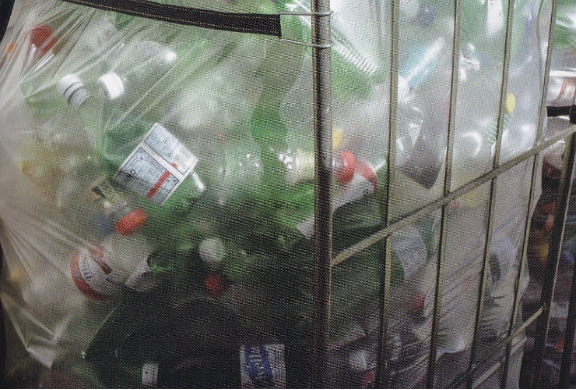
Figure 1: Cole, Blind Spot (Random House, 2016), 109.
In a subsequent pairing from Vals, Switzerland, Cole further interrogates the ekphrastic interval linking his words and photographs by rhetorically formalizing the engagement between text and image. The tightly framed shot of an assortment of bottles only intermediately visible through a plastic bag's translucency, sits opposite the following textual approximation:
Something covered. Something waiting. Something under pressure. Something pressed on and having difficulty breathing. An extension of something horizontal and elastic to something vertical and rigid, to which it is attached with a clasp or a hook. Something black. Something green. Something voluminous but light. Something with bars, like a cage. Something swollen and protuberant, like a cock in a pair of jeans. Something seen through a translucency.40
Cole's ludic reverie registers the formal features of his photograph. By way of its explicit, formal economy, Cole's repeated "something" identifies and catalogues the forms and forces working within the frame, while simultaneously conveying the abstraction inherent to the image. Like the unassuming pinnacle of Piz Corvatsch and the beguiling serenity of Muottas Muragl, the discarded bottles of Vals as captured by Cole foreground photography's perplexing ability to make visible that which exceeds representation. Though the anaphoric "something" Cole points to is plain to see, through the plastic, "something" else remains, present yet unnamed. As Cole demonstrates, whatever its analytic purchase, ekphrasis cannot but gesture towards the phenomenon of perception through obscurity.41) His attention to "the limits of vision" shapes Blind Spot, and leads Cole to conclude his postscript with the enigmatic declaration that "to look is to see only a fraction of what one is looking at."42
Cole's interest in the ways that language and photography grapple with ephemerality encourages Siri Hustvedt, the author of Blind Spot's foreword, to describe Cole's project as a "phenomenological one," for its "study of a person's embodied consciousness in relation to the visible world."43 Blind Spot warrants such characterization less for any one of its images in and of themselves, and more for the nuanced motifs Cole develops through his exploration of what it means to engage the world through photography. Throughout Blind Spot, Cole's affinity for expressions of fragmentation and imperceptibility echoes the skepticism expressed in his monthly New York Times column, "On Photography." In one column entry, "A True Picture of Black Skin," Cole celebrates the existentialism visualized by Roy DeCarava's signature use of photographic overexposure. Cole reflects on the tendency of DeCarava's Black subjects — often pictured in chiaroscuro against darkened backgrounds or amidst indistinguishable gatherings — to fade into their surroundings due to the characteristically low contrast of his images. By deliberately constraining the dynamics of light in his work, Cole suggests, DeCarava avers "that there's more there than we might think at first glance, but also that, when we are looking at others, we might come to the understanding that they don't have to give themselves up to us."44 Discussing Mississippi freedom marcher, Washington, D.C., 1963, and Five Men, 1964, photographs which both exemplify DeCarava's commitment to nearly-abstract choices of exposure, framing, and printing, Cole associates the images' optical difficulties with "moments of inwardness [that] open up a different space of encounter."45 Cole brings together DeCarava's artistic decisions to formally flatten and obscure his subjects with his own efforts, as a viewer, to realize the photographs' promise of disclosure. Cole lauds the formal frustration found in these pictures: by effectively withholding that which they also represent, he argues, DeCarava's photographs "make a case for how indirect images guarantee our sense of the human."46
If Switzerland inspires Cole's most evocative reflections on photography's paradoxical tendency to obfuscate the very overlays of history, identity, language, and visuality that have so long defined the medium, the United States prompts his most acute consideration of that which lies beyond photography's remit. New York City, in particular, locates the problem of obscurity in Blind Spot. Across the six images Cole attributes to New York City — which he distinguishes from any of its associated boroughs — several figures stand with their backs turned to the camera, their identities withheld. Pictured at various places across the city, each of Cole's subjects seem engrossed in their own affairs, as unaware of Cole's presence as they are of the occasion of their documentation. Along with their visual similarities and their common location, each photograph is accompanied by a passage that, when considered alongside the others in this sequence, intimates a conceptual motif running throughout Blind Spot. The first image in this sequence, of a blonde woman standing on the sidewalk, is paired with Cole's brief exegesis on Agamemnon's sacrifice of Iphigenia as rendered by the 4th century Greek painter Timanthes. As an art historian by training, Cole's broad range of reference brings his photograph into tight association with Timanthes's painting by way of their shared interest in the idea of unavailability. In the painting — which itself goes unreproduced in Blind Spot, figuring yet another absence — Cole observes that whereas most of the figures' expressions of sorrow are "portrayed with stunning accuracy," Agamemnon's grief proves so extreme that "Timanthes could not, or would not, go beyond the limit of what he had already shown. And so he depicted Agamemnon without depicting him: turned away, with a veil over his head."47 The layered resonance of these refusals — of Iphigenia's life, of Agamemnon's peace, of Timanthes's portrayal — informs Cole's characteristic skepticism of photography's capacity to facilitate intersubjectivity.
The remainder of Blind Spot's New York City sequence trades formal exegeses for more contemplative passages narrated by a first-person speaker. Cole extends his motif of declination by photographing people from behind to contemplate the ways in which "one turns away to show what cannot be otherwise be shown." For Cole, depictions of such denial, refusal, or withdrawal force an aesthetic and ethical question: how to read with and against the signifying grain of photography; how to reckon with the photograph's polysemous open-endedness? Next to an image of a sailor walking in the opposite direction of street signs leading to the city's 9/11 memorial plaza, Cole's narrator makes reference to the Danish and Dutch painters Hammershøi and Vermeer, as authorities on "the power of a gesture that speaks without being spoken to."48 Neither ekphrastic nor exegetical, this passage exemplifies a critical function of juxtaposition by holding open, rather than closing down, the indeterminate multiplicity of meanings evoked by the text's association with the sailor's picture. Whether the sailor has turned their back on Cole, the memorial, or the memorialized, is one question among many the photograph raises, even as it also plausibly shows the sailor's very departure from the plaza. As Cole's speaker suggests, it is the ambivalence, rather than the truth — of the sailor's gesture, of the photograph's message, of the conclusions the narrator themselves can come to — that comprises the subject at hand. As snapshots of passersby, Cole's images exceed familiar conceptualizations of the deferral of meaning, and instead visualize a manifest limit to that which photography can disclose.
Whatever praise Cole offers up of the casual encounter, or of the cosmopolitan subject's quotidian experience, Blind Spot insists on the photograph as a hermeneutic threshold across which communication is fundamentally challenged rather than preserved. Cole's speaker can only pose questions of a man pictured in a curbside phonebooth: "what is he saying? To whom is he talking?" Cole foregrounds the speaker's distance from the scene of the photograph by emphasizing the unavailability of his subject. This figure, like the ancient and classical subjects of Timanthes, Hammershøi, and Vermeer, has turned away from the camera, to face the phonebooth's interior — a gesture that motivates the speaker to suggest that "He is secret in public," and to reflect on the fact that "the one to whom he speaks cannot see him."49 Does the unavailability of this unheard conversation constitute a blind spot? In its depiction of this inaccessible act of communication, Cole's photograph objectifies itself as a merely visual record, thus divorced from the context of its production. As he does when faced with potential ostracization in the modern village, Cole embraces the scenes of silence that pattern Blind Spot for the ways they evince photography's power to limn and preserve opacity and difference simultaneously. For Cole, the hermeneutic threshold of photography precipitates a profoundly humanistic inquest. "I acknowledge the dumb skull, the verso of the face, the local globe from which all thinking originates," proclaims Cole's speaker, opposite his image of a person studying the first century "Statue of a Young Boy," on display at the Art Institute of Chicago. Extending the concerns of his New York City sequence to Chicago, the speaker avers the existential value of photography's unique remit. "In certain pictures, we can verify a character's presence," the speaker reasons, "but, without the clues of the confessional face, not what the character thinks. What has turned away contains itself." Rather than disavowing either the photograph or the photographer, the turn away emerges finally as an affirmation of the subject's interiority.50
The opacity that Cole recognizes in the city's anonymous milieux ramifies out beyond his New York City sequence to inform his wider investigations into the challenges of intersubjective communion. Reflecting on the opposing facades of his neighbors' apartments in Brooklyn, Cole muses on the literal and figurative distances between them: "I begin to imagine their lives and their imaginations, in all their foreign languages," he writes as their lights go on in the evenings, "and I begin to imagine them imagining the lives lived in my apartment, and I begin to remember the shortage of bridges between them and me."51 Evidence of others' inner lives precipitates both curiosity and solipsism, as Cole's looping reflection suggests — a damning proposition that seems both corroborated by and presumptive of its corresponding image, in which a person standing perpendicular to the window beside them looks inward, to the room's interior, rather than towards the outside world. Cole voices a similar lamentation opposite an image made in Queens of wallpaper plastered above a baggage claim conveyor belt. "In the city," Cole remarks, perhaps in response to the wallpaper's photographic vista of skyscrapers, "there is no shortage of stories, no scarcity of divulged secrets, only (it sometimes seems) a dearth of ears."52 Photography does not collapse difference, Cole contends — rather than establishing a universal language, he insists, the medium delivers those involved in the photographic encounter to the common ground of open-ended interpretation. Tracing this line of thought from Brooklyn, to Queens, to Milan, the location of his first solo photography exhibit, Cole juxtaposes an image of leaves behind a pane of fogged glass with a suggestion of how distances of communication and difference might otherwise be bridged. "Unable to know one another, we must simply presume a landscape of inner complexity for each person we meet," Cole reasons, emphasizing photography's inherent superficiality: "when we look at a small scene ... we don't literally see the emotional landscape of individuals within the city ... What we do see, with luck, is something that can work by analogy, as in the work of poets."53 Analogy and presumption — rather than deduction or causality — motivate the humanism of Cole's photography.
Regarding Fernweh
The global scope and formal symmetry between text and image in Blind Spot give way in Fernweh, Cole's second photobook, to a study focused entirely on Switzerland and comprised predominantly of photographs. Published in 2020, Fernweh interweaves Cole's photographs, taken across the country between 2014 and 2018, with text adapted from a nineteenth-century guidebook for travelers passing through Switzerland. Fernweh's images of Swiss mountaintops, villages, and everyday objects draw inspiration from several sources, including Blind Spot itself, which serves as both precedent and intertext for the second collection (though Cole does not use captions in Fernweh, many of Blind Spot's Swiss images either explicitly recur in Fernweh, or visually reference the earlier text by re-imaging older scenes from slightly different vantage points). By citing and recombining language found in the guidebooks of Karl Baedeker, a Swiss pioneer of the illustrated travel aide, Cole puts Fernweh into conversation with a tradition of travel writing dedicated to an exploratory yet disinterested explication of the world. Whereas Blind Spot's book-length poem advanced by way of the regular, prosaic passages Cole paired with his images, his words meander throughout Fernweh's pages, scattered and resistant to either syntactical or conceptual coherence. Echoing excerpts from Baedeker's work, Cole's writing in Fernweh emphasizes its fragmented quality by evoking disorder, jeopardy, and transience. "Whole families perished," Cole writes, beneath an image of a desolate mountainside covered by snow and boulders — "Resistance was useless."54 Cole repurposes ekphrasis in Fernweh, as he does in Blind Spot, to highlight where text and image diverge from one another, instead of coming together. An image of a building and its surrounding hillside, both completely carpeted by neat, green grass contrasts sharply therefore, with Cole's incongruous epigram, "abrupt abyss," on the opposite page.55 Self-evident truth remains under question in Fernweh, as text and photography consistently slip past one another.
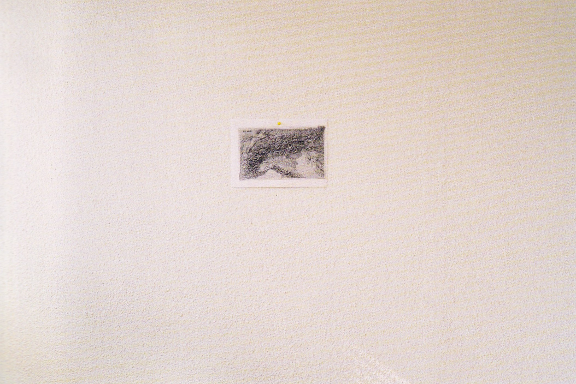
Figure 2: Cole, Fernweh (Mack Books, 2020)
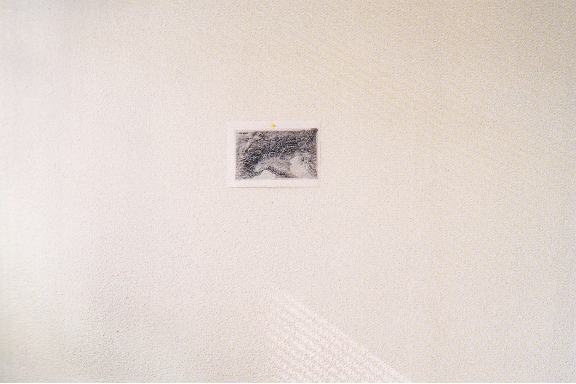
Figure 3: Cole, Fernweh (Mack Books, 2020)
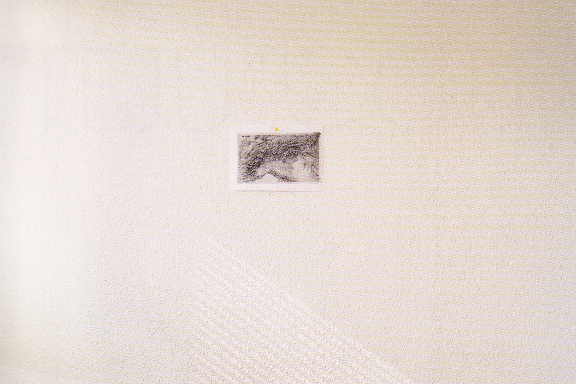
Figure 4: Cole, Fernweh (Mack Books, 2020)
Whereas Blind Spot examined the arbitrary interaction between language and visuality from the world traveler's constantly shifting perspective, Fernweh valorizes studious attention to the aestheticization of place and space by meditating on the situatedness of its author. Cole considers his presence in Switzerland in a variety of ways throughout the text, using his camera to image and analyze stretches of time, intersections of the natural and built environment, and geometrical arrangements found in everyday life. Across a sequence of three photographs that comprise the text's opening pages, lines of light passing through venetian blinds steadily climb a blank wall towards a suspended relief map of the Swiss Alps. Each image in the sequence charts the light's incremental progress up the wall, contrasting the inexorable passage of time with the map's unchanging features. Wordless, this sequence serves as an epigraph of sorts for Fernweh, insofar as its photographs signify both in and of themselves and in cooperation with each other, generating a visual syntax of their own. The sequential syntax Cole employs in Fernweh stresses the temporal contingency of his work, whether he documents the world moving around him, or moves himself to capture a scene numerous times, from slightly different angles. In a sequence similar to Fernweh's opening images, a man's stillness behind a set of glass doors is accentuated by the there-now-gone-again reflection of someone passing behind Cole's camera. Along with its insinuation of movement, and evidence of a world yet in the making, the diptych in Fernweh identifies the interval between exposures as a unit of signification unto itself. What transpires from one moment to the next, in this interval, either to motivate or to discourage subsequent frames remains inarticulable yet indispensable to the project's larger enunciation.
By incorporating the intervals between images into Fernweh's formal exploration of his own movement through space and time, Cole primes readers to recognize immanent and irregular patterns in his text. Such patterns manifest most commonly through repeated forms across Cole's images, as with the first two pictures of the main text, in which the pentagonal shape of a sun patch in the first photograph is reiterated by the angles of a large stone on the following page. Rather than causal connections, or ontological relationships, Cole's eye seems most consistently trained on analogical correspondences between his objects of study. If these analogies prove "more easily imagined/ than described," as Cole writes alongside the sun patch and boulder images, such may be his intention, as Fernweh's patterns of visual composition and textual sequence regularly involve inductive rather than deductive strategies of representation.56 The correspondence between sunlight and stone in these first images, for example, obtains not only in their geometrical resemblance, but also in Cole's subtle query of presence and absence. Over and against the stone's geometrical resemblance to the sun patch, the images' juxtaposition encourages readers to compare the boulder's positive physicality with the disincarnate transience of the sunlight, constituted as the latter is by the shadows of the surrounding rooftops. In addition to substantiating these patterns, Cole demonstrates how the analogical function also proposes contingency — e.g., the provisional configurations of light and shadow; the incidental contours of the stone formation — as a fundamental aesthetic principle transcending his text.
People rarely appear in Fernweh's images and, when present, predominantly figure at a distance, shot from behind or captured through the transparency of a barrier. A team playing in a field framed by trees and bushes in the picture's foreground; a person's silhouette aboard a passing ferry; a solitary customer reading on the patio of a lakeside restaurant — the Switzerland of Cole's project is characterized by the peculiar absence of other people, giving an impression of a nation documented during its off-season. In Fernweh's afterword, Cole cites a colleague, M, and her comments on his text's preponderance of empty sidewalks, roadways, hiking trails, and plazas. "I keep thinking," M writes, "about the world made by us and without us. [Fernweh] is not ... an apocalyptic book ... It's not nostalgic. And yet I can't help but feel the intimation of — not ruin — but a kind of disappearance."57 M's impression of an absent humanity in Fernweh highlights Cole's use of negative space to theorize his own contingent presence in the world. Whether tracking the movement of light, or sussing out quotidian coincidences of geometry, or studying the lives of others, Cole's images insist upon the perspective of an interested observer. Cole suggests as much, albeit indirectly, as he reflects on the extent to which Switzerland's picturesque vistas seem to anticipate his own aesthetic sensibilities. "All closely observed worlds seem to be thinking themselves, remembering themselves, but few places are as close to their perfected postcard image as Switzerland is," Cole writes, stressing not only the impression of autonomous activity that so many of his pictures capture, but also the artifactual character of Switzerland's photographic legacy.58 From this perspective, the scarcity of people and focus on environment in Fernweh emerge as clearer signs of Cole's efforts to visualize how photography reshapes our existence in the world.
Photography sits amongst other technologies of representation in Fernweh, underscoring the text's central claim that we come to know the world through visual representation. Pictures of topographical maps, scale models of mountain ranges, and informative signs on observation decks emphasize Cole's fascination with Switzerland's intensely mediated self-regard. Images of the country's mountains and lakes reproduced on furniture and posters wherever he travels persuade Cole that "to photograph Switzerland, is to rephotograph it," such that "remaking the photographic image from a contemporary territory [merely reveals that it] has been corrupted by knowledge." Switzerland already "knows about photography and postcards and maps and posters," Cole decides, observing that "this knowledge is not antic or self-conscious," but "manifests, instead, as an unsettling mixture of serenity and melancholy."59 By linking Switzerland's serene melancholy to its hypermediated visual identity, Cole expresses an abiding reservation about photography's presumptive yet unassuming authority. The charts, globes, and models — media which in and of themselves also purport to disclose truths about the world — pictured throughout Fernweh are subsumed by the rapacious indexicality of the photograph. As such reproductions of reproductions — what Cole cannily describes as Switzerland's "rephotography" — suggest, the country's very sublimity has been exhausted by its own photographic record.
Nevertheless, over and against such jeopardy, Cole makes a case in Fernweh's last pages for photography's redeeming power and for the medium's own redemption. Cole's careful attention, to the angles, corners, and intersections of bus stops, city streets, and mountain paths, imbue Fernweh with a future perfect sense of anticipation. What remains to be done, or to be seen, in these places reverberates as an overarching query of Cole's work. A series of folds, spanning Fernweh's final images — across the surface of an unfurled map; in the miniature peaks of a model mountain range; in the real peaks of an actual mountain range; and in a patch of sheer fabric fluttering in the wind — collectively testify to Cole's faith in observation as the shared provenance of poesis and photography. Between these metaphorical and literal folds, Fernweh's closing lines reiterate the text's fundamental, hermeneutic distinction between what photographs represent and what they help us to see: "former disasters and avalanches/ vast convulsions in/ the solid crust of the earth/ meandering through it like/ a thread/ of silver."60 This metaphor, of an untapped vein of potential underlying the sedimentation of catastrophic change, speaks to the material contingency of photographic images. As Cole's text illustrates, though photography's indexical relationship to the physical world orients it towards the past, its analogical properties make new interpretive possibilities ever present. Such is the implication of an image included in both Fernweh and Blind Spot, made at Gemmi Pass in Valais, Switzerland, in which an array of blank signs mark an otherwise nondescript corner of mountain trail. "It was up here," Cole notes, across from the picture in Blind Spot, "having narrowly escaped a fatal fall, that James Baldwin figured out what to call the novel he was working on: Go Tell It on the Mountain."61 Though Cole likely sought this spot out, his picture is made possible nevertheless by the coincidence of his path with Baldwin's: the intersection where Baldwin once stood, his trace, is registered here by Cole's juxtaposition of photography and language, by either writers' affinity for Switzerland, and by their respective investments in history. More than coincidence, finally, this moment of recollection in both texts — first in Blind Spot's image-text pairing, and then in Fernweh's republication of the photograph — highlights contingency's independence of indexicality. By picturing this deserted mountain path and its lone, blank signpost, Cole enjoins readers to reconcile what the photograph implies—e.g. an historical coincidence with Baldwin, decades apart—with a nuanced representation of absence.
Regarding Golden Apple of the Sun
Cole turns inward in his third photobook, Golden Apple of the Sun (2021). Comprised of fifty-three photographs made during the 2020 Covid-19 shutdown and the final months of the United States general election, the collection surveys the everyday items found on Cole's kitchen counters. Cole's pictures of the used dishes, empty containers, scattered utensils, and food scraps hint at the self-imposed parameters of his project — restricting himself to capturing only what he finds on his countertops each day, Cole devotes Golden Apple to the genre of the still life. Stuck inside, in situ, the global, wandering subject of his earlier projects becomes a passive observer of quotidian minutiae, particularly as Cole commits to refraining from manipulating his counters for any given picture. Presented with the detritus of his own domestic rhythms, Cole lets his physical confinement delimit the formal features of his work:
Once I embraced the inconvenience and annoyance of not being able to move things around, once I submitted to the accidental occurrences of the light, the chance appearance of what we last ate, or were about to cook ... then the 'organization of the rectangle' could become purely optical.62
The tight focus of his subject matter pushes Cole to reconsider the expressive potential of both photography in general and the phototext in particular. "What will be of interest is the operation of chance in this small space," Cole muses, reflecting on the concentric arenas of his kitchen, his viewfinder, and his leitmotif: "the commitment to chance operations is what opens the way to a true diaristic feeling because, rather than asking what I can do to manually organize the given into a picturesque scene, I shift the question to one of what the kitchen looks like right now."63 As Cole looks beyond the apparent, "given" limitations of the world before him, "chance" emerges as a principle of immanence linking Golden Apple to his previous work.
In an essay following his photographs, Cole concludes Golden Apple with an extended reflection on the multiple functions of chance in his project. In contrast to the correspondences between apposite forms that inspired so much of the visual material in Fernweh, and Blind Spot before it, Cole describes the unexpected yet fortuitous arrangements in his kitchen as products of disinterest and superfluity, rather than fleeting, unique moments in time. "After almost four weeks ... the spaces between the objects — the shapes created by the black counter — spaces that are only 'in the picture itself,' also become familiar," Cole reports, as though writing in a diary or a travelogue; "[t]he black counter becomes ever more active. Inside each photograph now, with the objects and the negative space speaking to each other, there is a new question: haven't I just seen this very photograph before?"64 Faced with the monotony of his creative process, Cole seems nearly to abdicate his role as author and photographer to become his own passive object of study. This deference to the chance configurations of his counters' surfaces also marks a shift in Cole's attention however, from the moment of any individual photograph's creation, to the relay linking his images' internal composition to Golden Apple's comprehensive structure. However central the challenge of sequencing his images has remained for Cole throughout his career, the protracted, process-oriented, practical parameters of his third project inspire him to reconsider the question of how his photographs should go together. "I jettisoned sequencing entirely," Cole explains, when asked about Golden Apple's apparent lack of direction or organization — "[it was] a book that tried to intentionally disappoint some of our expectations of what a photobook should do."65 Cole's efforts to disrupt the photobook form from within, by denuding its visual elements of textual support, bear out Daniel Palmer's observation that "as signifiers, photographs either say too little or too much — which is why [they often] come with a written supplement, to overcome their assumed deficit or to tame an unruly surplus of latent meaning."66 By stripping his volume of the visual eclecticism, immediate textual interaction, or overt sequential rhythms that typically characterize his projects, Cole compels Golden Apple's photographs to signify for themselves. This bid at what he terms the "analogical thinking" of a "language without words" distinguishes Cole's third photobook as his most devoted consideration of photography to date.67

Figure 5: Cole, "OCT 02 14:01." Golden Apple of the Sun (Mack Books, 2021)
Insofar as it provides him an opportunity to reflect on his work, Cole also uses his essay to dramatize his interpretive encounter with his own photographs. The medium-specific instant of photographic representation is protracted through Cole's account of working with his images across different mediums: "looking at them through the camera's viewfinder, and subsequently on my computer, and after that as prints, makes them newly visible, renegotiates their previous visibility."68 As his pictures seem to shift before his eyes, in apparent rebuke of the medium's characteristic stillness, Cole reconsiders his authority over the mercurial interpretations to which the unintended arrangements of objects and the spaces between them give rise. "Without my interference," Cole muses, "latent organizational logics of the picture plane will emerge. It will come to seem as if each element was placed there by a wry mathematician."69 Cole's fascination with the fortuitous results of his perfunctory exercise recalls Roland Barthes's meditation on how photographs mediate the relationship between monotony and variation. As he details in Camera Lucida, Barthes views his own interest in photography bookended on one side by the "average affect [of]... studium... [or] a kind of general, enthusiastic commitment... but without special acuity;" and on the other by that which "break[s] (or punctuate[s]) the studium... [that] element which rises from the scene, shoots out of it like an arrow, and pierces" him.70 More than any of Cole's other phototexts, Golden Apple mimes the play of intrigue and disinterest that Barthes characterized as photography's most enigmatic function. Perusing his own "field of unconcerned desire [and] various interest," however, Cole finds no punctum among his counter photographs, no prick to interrupt the continuity of their studium.71 Unlike Barthes, whose meditation on photography's capacity to overwhelm our aesthetic judgement emphasizes the distinctive element of those images that stay with us, Cole eschews the punctum entirely.
Even as Cole entertains the impression that his photographs have supplanted his artistic authority with their own incidental yet apposite geometries, Golden Apple belies his view of the photobook as a faithful if idiosyncratic repository of the artist's aesthetic experience. Whereas the overt visual and verbal entanglements of Fernweh and Blind Spot illuminate the contested ground that language and photography share, Cole's more subtle decoupling of image and text in Golden Apple serves to displace the work of interpretation from the act of creation. In teasing his own self-abnegation, Cole uses his exegesis to foreground his photographs' paradoxical capacity to remain both hermeneutically open and hermetically sealed at the same time. Faced with their tedium, however, as Cole finds himself "drawn to... the poetics of a relation that wasn't there before," his reflection rebounds from the inscrutable photographic objects before him to himself, the photographing subject.72 Of his last day of shooting, Cole writes:
It is election day. Slant wintry light coming in. Photographing not only with the finger on the shutter release, not only with the eye in the viewfinder, but with the breathing in and out of the one who is in every picture.73
Here, from the vantage point of both author and audience, Cole writes of his image from beyond its frame, placing it in the world and time of its creation, and also recognizing his own implication in the photographic act. Rather than signaling the foreclosure of interpretation altogether, Golden Apple figures the distance between photographic and textual representation as an interval shaped by subjective inquiry.
Cole's investigations into the ways that photobooks complicate our understanding of the relationship between photography and language squares a hermeneutic circle opened up by Baldwin's reflections on the stranger's aesthetic experience of the world. In the closing moves of Stranger in the Village, after conceding the impossibility of communing with the villagers of Leukerbad as anything other than a stranger, Baldwin takes comfort in his conviction that while "the cathedral at Chartres ... says something to the people of this village which it cannot say to me ... it is important to understand that this cathedral says something to me which it cannot say to them."74 Notwithstanding his estrangement from the village and his unfamiliarity with the material world before him, here Baldwin embraces the difference of his subject position for the unique perspective that it affords. Indeed, across his projects, as word and image vie with and mutually inform one another, Cole provokes and elaborates upon the ambiguity evoked by the "something" that Baldwin hears. Opacity and indeterminacy — or the unarticulated, unforeseen features of our world — formally motivate Cole's phototexts insofar as they each trade closure and finitude for patterns of inductive play. In each of his projects, whether squarely pitting visual and verbal representation against one another, or allowing either to immanently inform the other, or separating both in order to distill and illuminate their respective expressive potential, Cole embraces the capaciousness of the photobook genre as an opportunity to commune with his own aesthetic sensibility. "Time with a photobook is a wander off the beaten path," Cole muses, alluding at once to the experiences of both composing and reading:
[s]itting with it, you have to sit with yourself... you're holding it, and what it promises is relief: the outside world falls away, they eye scans the image, you sense the paper on your fingertips... you hear the sound of the turning page, you see the next image, you become aware of your own calm breath.75
For both Cole and Baldwin, returning to the idiosyncrasy of aesthetic experience holds open the possibility of new, creative expression in defiance of the formal, generic, and social arrangements that threaten to overdetermine our engagements with others and with art.
Cole Morgan researches African American narrative theory and photography. He is an Assistant Professor of English at the University of California, Irvine.
Banner photograph taken from Gordon Parks's "New York, New York. A woman and her dog in the Harlem section," courtesy of the Library of Congress.
Many thanks to John Casey for assistance with the title of this article.
References
- James Baldwin, "Stranger in the Village," in James Baldwin: Collected Essays, ed. Toni Morrison (Library of America, 1998), 118.[⤒]
- Baldwin, "Stranger," 119.[⤒]
- Baldwin, "Stranger," 121.[⤒]
- Baldwin, "Stranger," 119.[⤒]
- Teju Cole, "Black Body," in Known and Strange Things (Random House, 2016), 5.[⤒]
- Cole, "Black Body," 6.[⤒]
- Cole, "Black Body," 7.[⤒]
- Cole, "Black Body," 11.[⤒]
- The term papillophlebitis generally refers to a condition by which the inflammation of one's retinal veins comes to compromise eyesight via so-called "blind spots." David Naimon, host, Between the Covers: Conversations with Writers in Fiction, Nonfiction, & Poetry, "Teju Cole: Fernweh," Milkweed Editions, February 1, 2021, 2 hr. 52 min.[⤒]
- Kunle Ajibade, "Contemplation is African: a conversation with Teju Cole," Journal of the African Literature Association 12, no. 2 (2018): 201-208.[⤒]
- Baldwin, "Stranger," 118.[⤒]
- Though Cole's 2024 photobook Pharmakon warrants its own consideration, I have limited my discussion here to his first three solo-authored phototexts. Additionally, Cole's 2019 collaborative project with the photographer Fazal Sheik, Human Archipelago, brings together images made by Sheik and text written by Cole. For the purposes of this argument and its discussion of his idiosyncratic approach to exchanges between verbal and visual media, I focus on the ways that Cole leverages his own writing against his own photography in his early photobooks. For further insight into Cole and Sheik's work, see Benjamin Williams, "'Who Is Kin to Me?': Textual Intimacies in Teju Cole and Fazal Sheik's Human Archipelago," Cultural Critique 119 (Spring 2023): 167-194.[⤒]
- Emily Johansen, "History in Place: Territorialized Cosmopolitanism in Teju Cole's Open City," Diaspora: A Journal of Transnational Studies 20, no. 1 (2011): 21.[⤒]
- Pieter Vermeulen, "Flights of Memory: Teju Cole's Open City and the Limits of Aesthetic Cosmopolitanism," Journal of Modern Literature 37, no. 1 (2013): 47.[⤒]
- Gabriele Rippl, "Picturing Lagos: word-photography configurations in Teju Cole's Every Day is for the Thief (2007/2014)," Social Dynamics: A Journal of African Studies 44, no.3 (2018): 480-481.[⤒]
- Jason Puskar, "Black and White and Red All Over: Photography and the Voices of Richard Wright," Mosaic: An Interdisciplinary Critical Journal 49, no. 2 (2016): 174, 182. For further analysis of this intermedial tension in 12 Million Black Voices, see James Goodwin, "The Depression Era in Black and White; Four American Photo-Texts," Criticism 40, no. 2 (1998): 273-307, and Virginia Whatley-Smith, "Image, Text, and Voice: Oppositions of Meanings in the Wright-Rosskam Photographic Text," Obsidian II 8, no. 2 (1993): 1-27.[⤒]
- For further consideration of Hansberry and Lyon's photobook, and wider contextualization of SNCC's use of photography's narrative function in its fight for social justice, see Leigh Raiford, "'Come Let Us Build a New World Together': SNCC and Photography of the Civil Rights Movement," American Quarterly 59, no. 4 (2007): 1129-57.[⤒]
- Sonia Weiner, "Narrating Photography in 'The Sweet Flypaper of Life,'" MELUS 37, no.1 (2012): 156. Weiner argues that instead of working seamlessly with DeCarava's images, Hughes's text "adopts a trickster strategy, which not only appealed to the white publishers and their readership, but also spoke to African American readers through a complex network of signifying, conveying meanings that might have escaped many non-African American readers."[⤒]
- Hilton Als, "Richard Avedon and James Baldwin's Joint Examination of American Identity," The New Yorker, November 6, 2017. The volume's peculiar combination of text and imagery endears Nothing Personal to some and estranges others — for this inconsistency alone, perhaps, Baldwin's essay was republished in 2021 without Avedon's photographs. Whereas Als praises the "dichotomies and juxtapositions" in Avedon and Baldwin's collaboration, for provoking such powerful, yet disparate reactions, Caryl Phillips criticizes their work's "fundamental clumsiness," "didactic images," and "rambling text" in a sobering critique of the publication's mixed reception by contemporary critics. See Caryl Phillips, "Nothing Personal: James Baldwin, Richard Avedon, and the Pursuit of Celebrity," ariel: A Review of International English Literature 48, no. 3-4 (2017): 20.[⤒]
- Imani Perry, foreword to Nothing Personal by Richard Avedon and James Baldwin (Beacon Press, 2021), vii.[⤒]
- Eddie Glaude, afterword to Nothing Personal, by Richard Avedon and James Baldwin (Beacon Press, 2021), 53-54.[⤒]
- Glaude, Nothing Personal, 54.[⤒]
- Patrizia C. McBride, "Narrative Resemblance and the Modernist Photobook," in The Chatter of the Visible: Montage and Narrative in Weimar Germany (University of Michigan Press, 2016), 146-147.[⤒]
- Teju Cole, "Smell the ink and drift away: why I find solace in the photobooks," The Guardian, Feb. 24, 2020.[⤒]
- Toni Morrison, "Making the Black Book," Black World, February 1974, 89.[⤒]
- See Howard Rambsy II, The Black Arts Enterprise and the Production of African American Poetry (The University of Michigan Press, 2011) and Courtney R. Baker, "Movin' on Up — and Out: Remapping 1970s African American Visual Culture," in Black Cultural Production after Civil Rights, ed. Robert J. Patterson (University of Illinois Press, 2019).[⤒]
- Cheryl A. Wall, "Reading The Black Book: Between the Liens of History," Arizona Quarterly 68, no. 4 (2012): 110.[⤒]
- Kinohi Nishikawa, "Morrison's Things: Between History and Memory," Arcade, 2021.[⤒]
- Margo Natalie Crawford, "Textual Productions of Black Aesthetics Unbound," in Publishing Blackness: Textual Constructions of Race since 1850, ed. George Hutchinson and John K. Young (University of Michigan Press, 2013), 193.[⤒]
- Morrison, "Making the Black Book," 89.[⤒]
- Crawford, "Textual Productions," 207.[⤒]
- Crawford, "Textual Productions," 207.[⤒]
- Cole, "Smell the ink drift away."[⤒]
- Teju Cole, Blind Spot (Random House, 2016), 324.[⤒]
- Cole, Blind Spot, 324.[⤒]
- Cole, Blind Spot, 24.[⤒]
- Cole, Blind Spot, 14.[⤒]
- W. J. T. Mitchell, Picture Theory: Essays on Verbal and Visual Representation (University of Chicago Press, 1994). 157. Regarding the ekphrastic encounter between words and images, Mitchell distinguishes between three forms of ekphrasis — that of indifference, hope, and fear — that help to understand Cole's disinclination from such rhetorical strategies. "All ekphrasis is notional, and seeks to create a specific image that is to be found only in the text as its 'resident alien,'" Mitchell suggests, but whether ekphrasis is hopeful or fearful (and seeks to collapse or reinforce differences between media, respectively), signals the extent to which such allusions can illuminate the function of the difference media themselves.[⤒]
- Cole, Blind Spot, 324.[⤒]
- Cole, Blind Spot, 108.[⤒]
- Mitchell, Picture Theory. Mitchell remarks on these kinds of limitations, arguing that "even those forms of ekphrasis that occur in the presence of the described image" like Cole's tightly corresponding prose, "disclose a tendency to alienate or displace the object, to make it disappear in favor of the textual image being produced by the ekphrasis. (157, n19[⤒]
- Cole, Blind Spot, 324.[⤒]
- Siri Hustvedt, foreword to Blind Spot, by Teju Cole (Random House, 2016), xvi.[⤒]
- Teju Cole, "A True Picture of Black Skin," in Known and Strange Things (Random House, 2016), 148.[⤒]
- Cole, "A True Picture of Black Skin," 149.[⤒]
- Cole, "A True Picture of Black Skin," 150-151.[⤒]
- Cole, Blind Spot, 170.[⤒]
- Cole, Blind Spot, 172.[⤒]
- Cole, Blind Spot, 176.[⤒]
- Cole, Blind Spot, 174.[⤒]
- Cole, Blind Spot, 310.[⤒]
- Cole, Blind Spot, 136.[⤒]
- Cole, Blind Spot, 156.[⤒]
- Teju Cole, Fernweh (Mack Books, 2020), n.p.[⤒]
- Cole, Fernweh.[⤒]
- Cole, Fernweh.[⤒]
- Cole, Fernweh.[⤒]
- Cole, Fernweh.[⤒]
- Cole, Fernweh.[⤒]
- Cole, Fernweh.[⤒]
- Cole, Blind Spot, 198.[⤒]
- Teju Cole, Golden Apple of the Sun (Mack Books, 2021), 109. Here, Cole has quoted Sergio Larraín.[⤒]
- Cole, Golden Apple, 104, 110.[⤒]
- Cole, Golden Apple, 123.[⤒]
- Teju Cole, "Interview: Teju Cole & Alice Zoo," interview by Alice Zoo, Granta, March 11, 2024.[⤒]
- Daniel Palmer, "Corresponding Associations: the Poetics and Limits of Photography as Dialogue," Photography and Culture 12, no. 3 (2019): 322.[⤒]
- Cole, "Smell the ink drift away."[⤒]
- Cole, Golden Apple, 123.[⤒]
- Cole, Golden Apple, 120 - 121.[⤒]
- Roland Barthes, Camera Lucida: Reflections on Photography, trans. Richard Howard (Farrar, Straus and Giroux, 1981), 26.[⤒]
- Barthes, Camera Lucida, 27.[⤒]
- Cole, Golden Apple, 106.[⤒]
- Cole, Golden Apple, 132.[⤒]
- Baldwin, "Stranger," 128.[⤒]
- Cole, "Smell the ink drift away."[⤒]
Related reading
 The Slow Burn: My Struggle
 Manifest Diversity and the Empire of Finance
Susan Sontag and the Americanization of the Nouveau Roman
 The Programming Era: The Art of Conversation Design from ELIZA to Alexa
“The Trouble Spot”: Racialized Paranoia and the Vision of the State in The Spook Who Sat by the Door
Cartoon Viscera
 Toward a Trans Fag Phenomenology: the Orientation(s) of Desire and the Afterlives of Lou Sullivan
 Big Color Analytics: Privatization, Precarity, Pantone
Seeing Past Consumption: Race and Species in the Slaughterhouse
Bernadette Mayer’s Photographic Counter-Memory
The Blues Brothers, Tammy Wynette, and the Long Denouement of the 1960s
 Side Hustle: College Sports and the Future of Academic Labor
Cliché’s Cringe: Aesthetic Judgment in Percival Everett’s Erasure
Toward a Poetics of the Detainee
The Thinking Novel: Theme-and-Variations Form in the Contemporary Novel of Ideas